Sunday, October 2, 2011

Bike performance on China's Got Talent

I live in a town that has a bike polo league, a synchronized bike ballet, and the Bay Area Dérailleurs, a bicycle inspired dance team... but I have never seen anything like this!

From China's Got Talent... 16 girls on a bike! Not to mention a lot of jumping and flipping. Incredible.


Thanks to the "related videos," I also learned about 23 year old Liu Wei from Beijing, who won the China's Got Talent Show on Oct. 10, 2010. He swims competitively, and plays piano... yet he lost his arms in an accident when he was 10 years old. His attitude & determination are inspirational. You can watch his amazing performance here.

Monday, September 19, 2011

Iron Science Teacher II

This past Saturday was the Exploratorium's first "Educator's Night." Not only was there free food and drinks, but there was a special edition of the Iron Science Teacher*. I've previously competed in the event, and I was happy to volunteer again.

My secret ingredient was "chalk." This was a tough one for me. After discarding a number of boring ideas, I clinched the title (for the second time!) with chalk** chromatography. (And, of course, putting kids in costumes... works every time.)

Click the image below to watch my 9/17/11 "victory" - secret ingredient: CHALK (my "show" is from 24:00 - 39:25) NOTE: the competition is just for fun; you don't actually win anything. :)


You can also click the image below to watch the 7/16/10 competition - secret ingredient: TRIANGLES (my "show" is from 21:08 - 35:58)


* Parodying the cult Japanese TV program, “Iron Chef,” the Iron Science Teacher showcases science teachers as they devise classroom activities using a particular ingredient—an everyday item such as a plastic bag, milk carton, or nail. Contestants are drawn from the Exploratorium Teacher Institute and compete before a live audience.

Apparently, back in 1997, the museum's high-tech webcast studio was looking for new shows. During a staff brainstorming session, a fan of the Japanese cooking show (which aired on a local television network, without subtitles, at the time) suggested naming a secret ingredient for science teachers to use in an experiment to present to the audience. "It was honestly and truly a joke," Linda Shore, Director of the Teacher Institute and host of the show, said, "We thought we'd do one show."

Now 10 to 12 shows are produced annually for the Exploratorium's Web site, many of them during summer institutes. "Secret" ingredients (which are actually revealed to participants in advance so they can practice) have included everything from ordinary baking soda and food coloring to Marshmallow Peeps and pantyhose.


** Seriously, I learned a lot about chalk. Most chalk produced today (I found out) is dustless - it still produces dust but the dust settles faster. "Manufacturers accomplish this by baking their chalk longer to harden it more. Another method, used by a French company, is to dip eighty percent of each dustless chalk stick in shellac to prevent the chalk from rubbing off onto the hands." This almost ruined my experiment!!!! (Cheap, not dustless, chalk pictured below.)


I also learned that the first true chromatography is actually attributed to a Russian scientist who used a liquid-adsorption column containing calcium carbonate to separate yellow, orange, and green plant pigments. He first used the term chromatography in print in 1906 in his two papers about chlorophyll! Conveniently for science teachers, calcium carbonate has traditionally been a major component of blackboard chalk. (Although modern chalk is now mostly gypsum.)

One last random fact: There is currently no Wikipedia page for the Iron Science Teacher... this has to change. :)

UPDATED OCT 4: Now, there IS a Wikipedia page for the Iron Science Teacher. The first Wikipedia article I've created "from scratch"! :)

Saturday, September 10, 2011

contagion billboard

Talk about your viral videos... I recently received a link to one of the most innovative billboards I've learned about.

From the YouTube page,
In support of Academy Award ® winner Steven Soderbergh's latest film "Contagion" -- in theatres September 9th, Warner Bros. Pictures Canada teamed up with microbiologists and immunologists from around the world to create a one-of-a-kind bacteria message board located at 409 Queen Street West [Toronto, Canada] in an abandoned store-front window. On August 28th, two large Petri dishes were inoculated with live bacteria including penicillin, mold and pigmented bacteria and almost overnight have revealed the true Contagion -- an artistic interpretation of the spread of a virus as depicted in the film.

Wow! You can visit the Contagion's IMDd page for more info on the movie itself, including the trailer. I am a big fan of virus movies... my favorite being the 1995 film, Outbreak.

The movie was filmed in Atlanta, Georgia (no doubt near or in the CDC) and San Francisco. In fact, one day in February 2011, I was riding down Polk St. and was forced to stop. Apparently, they were filming Contagion in downtown SF that afternoon. It was cool, but also a little scary - military personnel, and long lines of people waiting to get into the imposing "MEV-1 Vaccination Center" (normally the Civic Auditorium)...

I was surprised to learn that Contagion was actually filmed at both my "homes" - the Bay Area and Chicago - at Central Elementary School (Wilmette, IL), Midway Airport, Sherman Hospital (Elgin, IL) and various other places in Glenview, Naperville, Waukegan, Western Springs & Chicago itself! (Oh, and Hong Kong & Los Angeles, but I am not connected to those places, so I am less excited about those shots.)

Anyway, back to science...

If you want to learn more about how agar is poured into petri dishes and inoculated with bacteria, you can watch this Steve Spangler video below. Then imagine it on the large scale of those billboards!


Saturday, August 27, 2011

colorful ant abdomens & honeypot ants

Recently, the UK Daily Mail featured this article about a colorful insect experiment! You can also click on either of the first two photos to be taken to the article.

Mohamed Babu is a scientist from South India. One day, his wife showed him some ants had turned white after drinking spilt milk. This gave him an idea!

Babu mixed the sugar drops with edible red, green, blue and yellow dyes and placed them in his garden to attract the insects. (He used a paraffin base for the drops, so that they kept their shape when touched by the ants.)

I can only imagine his glee when the ants abdomens began to turn the colors of the drops!


He noticed that the ants seemed to prefer the lighter colors - yellow & green - to the darker colors, red & blue.

This experiment reminds me of an excellent question from a student one day in science class long ago. My student asked,
We've learned that all arthropods have a tough outer covering called an exoskeleton. However, we have also learned that some arthropods, such as "honey-pot" ants and ticks actually expand as they collect honey or blood in their body. Is the exoskeleton able to expand? Do these organisms have a different type of exoskeleton that other arthropods?

I didn't know the answer so, as usual, I asked the UCSB ScienceLine (a GREAT resource for science teachers or other curious folks). You can still see the question since it is archived on the site. A couple of scientists explained how exoskeletons are actually made of hard plates joined by soft areas, much like the pads on a baseball catcher. When the honeypot ants do their thing, the soft parts stretch, but the hard parts stay the same size. The scientists point out that the exoskeleton is "now useless at protecting the ant, but the full ants just stay inside the nest where they are fairly safe."

There are somewhere around 30 different species of honey pot ants, and they most often live on the edges of deserts in Western America, Mexico, Australia, South Africa and New Guinea. During the rainy season, particular worker ants (called repletes) drink up the liquid sugar from flowers until they are engorged. Then, during the dry season, they provide food for the rest of the colony by regurgitating a little bit at a time. You can see a great picture of a single ant here. Even NASA.gov has a blog post about these wonderful ants which includes a recording of a conversation with a scientist who knows a lot about ants - he is working on classifying all of the ants in the world!

Just for kicks, here is a CC pic of some full honey pot ants!

Image is CC-BY by Greg Hume via en.wikipedia.org

Tuesday, August 23, 2011

A Blogging Black Hole - Year in Review

Welcome back to Celebrating Randomness! As many of you know, "This blog is intended mainly for my middle school students, but is gladly shared with all those who appreciate randomness in science and life."

Seventeen months ago (when Blogger discontinued its ftp support and I had to restructure where and how my blog was published), I just quit. I was still finding random facts and interesting science, but these ideas were languishing in draft.

If anyone is interested (or really, really, bored) here is a quick recap of 101 ideas that ended up in draft during this "blogging black hole." Whether or not they get developed into full-fledged posts remains to be seen, but I am moving forward in search of more randomness in the future.

Things I found interesting (date put in draft)
  1. UCBerkeley develops a portable CellScope that uses cellphone cameras and may revolutionize diagnostics in the field... and the classroom? (8.21.11)
  2. Pandora for books? BookLamp launches. (8.20.11)
  3. Oxford English Dictionary introduces new words for 2011 - 'retweet' 'seting' and 'woot' make the list. (8.19.11)
  4. MIT researchers tested a new drug that proved effective against 15 viruses - we'll see what comes from future tests. (8.14.11)
  5. Ever wonder how magnets work? (8.9.11)
  6. Will light waves provide a faster internet connection? (8.6.11)
  7. This Swedish guy apparently did not realize that authorities don't really support home atom splitting.... (8.3.11)
  8. Cyclists are faster than Jet Blue flight during LA's Carmaggedon (7.29.11)
  9. Great house for a book-lover - full of shelves! (7.7.11)
  10. This year's Alameda State Fair boasts the world's largest hamburger, weighing in at 700 pounds! (7.5.11)
  11. A friend got me interested in the science of fireworks! (source 1, source 2, source 3, source 4, source 5) (7.3.11)
  12. A condo association in Palm Beach plans to pay for DNA testing for abandoned dog poop on the premises. (6.30.11)
  13. I saw a sand fulgurite for the first time at the Boston science museum! They are created when lightning strikes sand. (6.29.11)
  14. In the Maldives, which already has a hotel with an underwater restaurant, now offers an underwater hotel room. (6.25.11)
  15. Chicken head tracking is hilarious! (6.19.11)
  16. I had no idea this variety of gummy bears exists. (6.17.11)
  17. It's pretty fun to put alkali metals in water, although I'd rather watch these videos than do it myself! (6.17.11)
  18. You can play A Google a Day - "Crack the question using the full range of Google search techniques in the search box above the question." (6.3.11)
  19. Obama signs an extention of the Patriot Act FROM FRANCE using an autopen. (5.27.11)
  20. This is a pretty good video about cheese. I learned a lot. (5.17.11)
  21. Military develops an "iron man" suit. Paralyzed UC Berkeley grad uses a modified version to walk across the stage at graduation. (5.15.11)
  22. Too lazy to count calories? Take a picture of your food and let the app Meal Snap do it for you. (5.14.11)
  23. Easily distracted people may have "too much brain" - really? Cool. (5.13.11)
  24. Some of the best geeky google doodles. (5.12.11)
  25. Awesome problem solving. This SF homeowner wants a garage, but city regulations prevent him from changing how his house looks on the outside. Check out what he did. (4.28.11)
  26. Yet another reason not to get Botox - it "blunts emotional understanding." (4.26.11)
  27. One of my students is obsessed with cone snails. Here are 2 cool videos: vid1, vid2. (3.23.11)
  28. A Michigan comedy festival opens by trying to beat the World Record for the number of people tossing rubber chickens at one time. (3.11.11)
  29. As one article puts it, "DJ Ruth Flowers, a 69-year-old British grandmother, is conquering the Parisian party scene." whoa. (3.10.11)
  30. I was interested to see QR codes popping up all over. (3.4.11)
  31. Senior Raynell Murrel wrote the song "I Can't Hear You With That Gold in Your Mouth" based on a school rules. (2.26.11)
  32. SF entrepreneurs sell cookies from their apartment window & delivers them on a string. (2.18.11)
  33. The WindMade labeling initiative wants to create the first global consumer label that identifies a product as made from wind power - will this be a trend? (2.11.11)
  34. OK, I like ducks, but apparently duckduckgo.com also "provides a clean interface together with a no-tracking privacy policy." (2.6.11)
  35. LaLa, a rescued penguin in Japan, shops for his own fish at the market in (2.4.11)
  36. This game - Who Pooped? - is ridiculous, and educational. (2.3.11)
  37. These dogs have indentified cancer with 98% accuracy. (2.2.11)
  38. City getting low on road salt? This town used pickle juice instead! (1.30.11)
  39. I guess typing two spaces after your period is old skool. (1.19.11)
  40. Not funny, but important. The paper orginally credited with linking the possible cause of autism to vaccines has been retracted and COMPLETELY DEBUNKED. Yet, people still believe it. Sigh. (1.17.11)
  41. Berkeley physicists trap antimatter - awesome! (1.15.11)
  42. My fifth graders asked the many periodic table spoofs, including a periodic table of smellements and an html one. (1.11.11)
  43. 3D printers, like the RepRap, are cool. Some printers can even "print" prosthetic legs! (1.10.11)
  44. Here's an awesome video of fruit and vegetables decomposing. (1.7.11)
  45. Josh Groban sings Kanye West tweets on Jimmy Kimmel Live - ridiculous. (1.6.11)
  46. Life must be more interesting driving a chalkboard car in SF. (12.29.10)
  47. I learned about the coin washer at the SF Westin St. Francis and other odd jobs. (12.26.10)
  48. Steve Spangler teaches about glow sticks: then and now. (12.26.10)
  49. A couple of 8 - 10 year olds have their study published in a science journal (12.23.10)
  50. Check out this cool interactive scale of the universe! Kinda like the old Powers of Ten movie... (12.20.10)
  51. Fecal transplants can be used to treat debilitating diarrhea. Sounds gross, but it's pretty awesome. (12.17.10)
  52. Guinness World Records certified the Bhut Jolokia as the world's hottest pepper. I also learned about the Scoville scale they use to measure hot-ness of peppers. (12.5.10)
  53. I always love hearing the current price for the gifts in the 12 Days of Christmas (2010) (12.1.10)
  54. I was floored to experience SF's interactive bus stops (Yahoo! Bus Stop Derby) - you could play against other neighborhoods while you waited for the bus! (11.26.10)
  55. The dictionary teaches us words for things we didn't know had names. (11.15.10)
  56. These creepy billboards will deliver personalized ads based on its approximation of your age and gender. (11.13.10)
  57. The bushcricket has the largest testicles: body size ratio. Its testicles are 14% of their body weight! (11.12.10)
  58. An interesting list of 19 products that America doesn't make anymore. (11.7.10)
  59. I'm almost done with a post about geckos regrowing their tails. (11.5.10)
  60. Speaking of dogs, they look really cool when they drink in slow motion. (11.4.10)
  61. Heaven to Betsy - here is a device so that your DOG can have a Twitter feed. (11.3.10)
  62. Germans hate the Google Street View. However, this time it was a fake Google car. (10.24.10)
  63. I love using this marshmallow experiment when teaching my students about the value of delayed gratification (10.23.10)
  64. Kim Kardashian was rumored to have a diamond-encrusted cake. This led me to discover some other really expensive food - like a $1000 bagel! (10.22.10)
  65. In Berkeley, I drove past this awesome bird car! I learned it was designed by the late Marilyn Dreampeace. (10.17.10)
  66. Wanna use an old skool typewriter with your iPad? Well you're in luck. (10.14.10)
  67. SF urban farmers raise chickens AND ducks! (10.13.10)
  68. Forget cuddly animals, you can adopt a microbe! (10.8.10)
  69. SunChips wanted to make a compostable bag, but then pulled them from the shelves because they were too loud. (10.7.10)
  70. The Belmont stop was voted most romantic 'L' stop. Well, according to Craigslist. (10.3.10)
  71. A Chicagoland student's design will now be featured on Chiquita banana labels. (9.23.10)
  72. Using the 2010 Census data, this user created maps of race and ethnicity for major U.S cities. (9.22.10)
  73. Check out this backpack for bikers with interactive lights. (9.16.10)
  74. I learned a new word - paraprosdokian! (9.11.10)
  75. Do you ever wonder what's REALLY inside a Twinkie? (9.10.10)
  76. Researchers say that movements associated with good dancing in men may be indicative of good health and reproductive potential. (9.9.10)
  77. At Nightlife "Games" night, I learned that the old Duck Hunt (see new version) won't work on flat screen TVs. (9.3.10)
  78. A local artist creates wonderful art for BART. (9.2.10)
  79. I found the best. cupcakes. EVER. (8.17.10)
  80. Students were asked to have DNA test in order to enter UC Berkeley. (8.12.10)
  81. Face transplants are incredible. (7.26.10)
  82. Boston Dynamics has the coolest robots. (7.21.10)
  83. Some facts about the ducks (and Duckmaster!) at the Peabody Hotel. (7.18.10)
  84. The carbon footprint of a banana is lower than the kiwi. (7.12.10)
  85. This push pin art reminds me of the toothpick guy. (7.11.10)
  86. Duck genitals are fascinating. Truly. You can read the lite version or the long version. (7.10.10)
  87. Some bacteria and pigeons (!) have magnetite in them, which may contribute to their sense of direction. (7.8.11)
  88. Some countries have an impressive list of banned baby names. (7.4.10)
  89. There is now a giant eyeball sculpture in Chicago. (7.2.10)
  90. I rode past a grassy field in SF, which I learned was for housing goats for urban landscaping jobs (7.1.10)
  91. From now on, the cheese will be tessellated on all Subway sandwiches. (6.30.10)
  92. I got new rainjacket. Sweat comes out, but rain can't get in. This eVent fabric technology is very puzzling to me. (6.21.10)
  93. So many people kiss & touch the Stanley Cup, Chicago lab EMSL Analytical had it tested for germs. Ends up, it's not that germy. (6.20.10)
  94. In China, there is a new, very strange trend of dyeing your dog to look like other animals (6.17.10)
  95. I went to a Chicagoland Owl Hardwood and saw some amazing imported wood - got a small sample of Ebony - one of only three woods that sink! (5.31.10)
  96. There are some great music video science parodies - Lady Gaga spoofs "Lab Romance" & "Chromosome" and, of course, there's that rap about CERN's Large Hadron Collider. (5.30.10)
  97. In Louisiana, people photographed a pink dolphin, which made me think about other albino animals. (5.29.10)
  98. Found a collection of crazy license plates. (5.28.10)
  99. Republican Senate candidate Sue Lowden made a foolish comment about health care and chickens. Democrats responded by setting up a website, "Chickens for Checkups," and by sending volunteers in chicken suits to her campaign events. (5.24.10)
  100. Someone shared a collection of these funny signs from abroad. (5.16.10)
  101. I love learning about the science of the new Bay Bridge. (5.12.10)
Stay tuned. :)

Sunday, April 24, 2011

2011 peeps contest

So, one of my favorite things about Easter (besides the Bring Your Own Big Wheel event in SF - watch my video from 2008) is the annual Chicago Tribune Peeps contest. Its call for entries happens sometime in March, and winners are announced on Easter Sunday.


This year's Chicago Tribune Winners include:
No. 1: 'Satine the Sparkling Peep from Moulin Peep'
No. 2: 'Larry Peep Live on PNN'
No. 3: 'Peepmares'

This year, I expanded my horizons and realized that the Chicago Tribune is not the only paper to run a Peeps contest (you can see all the Tribune entries here)

Other contests include:

And... if you haven't had enough Peeps, you may want to check out: The Power of the Peep, a documentary...
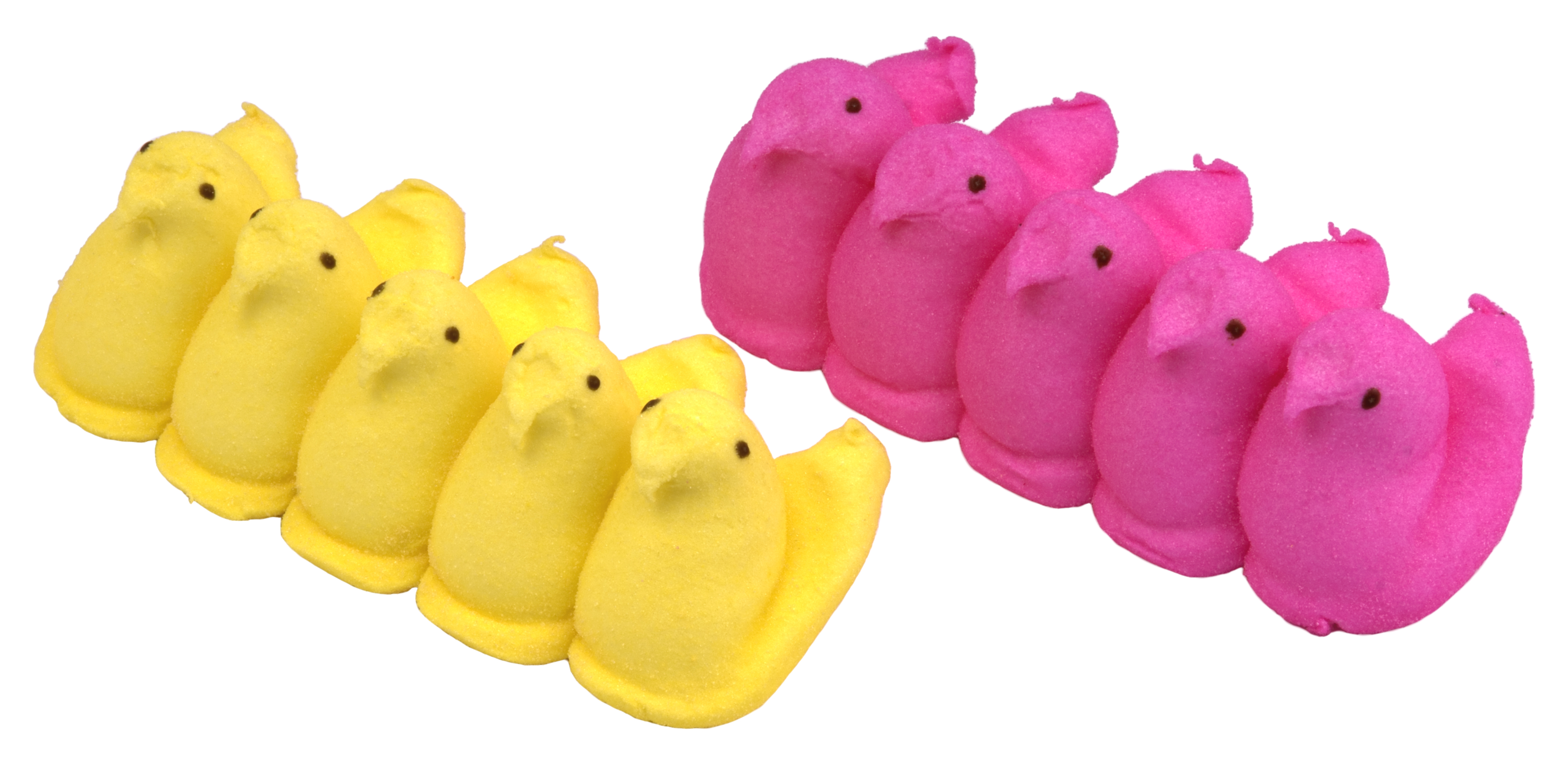
Boxed in sets of five and staring out with sugar-blackened eyes, Marshmallow Peeps have been emerging like clockwork from a factory in Bethlehem Pennsylvania since the 1950s. They were born in the mind of a Russian immigrant, hatched in Easter baskets, and eaten by the dozens across the country. Then they armed themselves with lances, stood in front of trucks, mutated in microwave ovens and set out on their own.

This is the story of what happened when a marshmallow met modern America. It’s the story of how a sweet candy product got to the shelves of your convenience store – and what happened after it left them behind.


The Power of the Peep - Marshmallow Peeps Documentary Trailer from weebedee on Vimeo.

Saturday, January 1, 2011

happy mathematical new year

A coworker at school passed this along....


2011 is prime number year

.....also the sum of 11 CONSECUTIVE prime numbers:

2011=157+163+167+173+179+181+191+193+197+199+211

Nice.

Tuesday, December 21, 2010

one world futbol

This blog post is long overdue, but I wanted to introduce you all to the One World Futbol Project. It uses a "Give One Get One" model - you purchase a soccer ball, and second ball is donated through a partner organization to an area with children in need, including war zones, refugee camps, and impoverished communities in the US and throughout the world. According to the website (Dec 2010), "One World Futbols have been delivered to 59 countries through nearly 100 organizations."

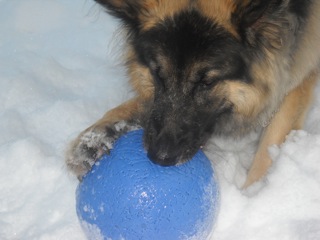
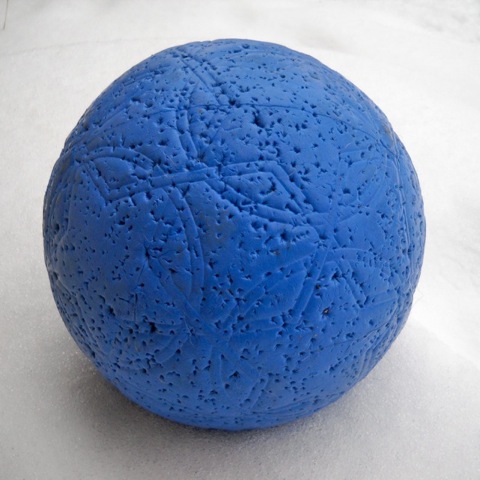
This ball is incredible. It is made from a "unique (proprietary) closed-cell foam," a material similar to the material used in Crocs sandals*. (I am VERY curious as to how it works... but the founder is keeping this quiet for now....) The ball never needs a pump and it never goes flat. This is not an exaggeration. It is so far indestructible. Nothing I have seen or read can deflate this ball, not urban landscapes, barbed wire, lions, pickup trucks, or two enthusiastic German Shepherds.
Yes, back in July I bought one of these balls for my parents' dogs - two German Shepherds with a track record of destroying soccer balls. To put it in perspective, here is a picture of the two "current" soccer balls in their yard - a One World Futbol and a traditional soccer ball.

Take a closer look at that One World Futbol taken in December, 2010 - that is a LOT of teeth marks! It is amazing to watch this ball, in the mouth of a 120 pound dog, as it alternates between being chomped on and re-inflating in the dog's mouth.

Creative Commons License
OneWorldFutbol by C. Mytko is licensed under a Creative Commons Attribution 3.0 Unported License.

Inventor and music producer Tim Jahnigen, from our very own Berkeley, California, provided the initial idea. (You can check out his Huffington Post blog posts.) The musical artist Sting put up the cash for research and development. (The two men know through Jahnigen's work.) The project officially launched just a few months ago on July 8, 2010, timed with World Cup fever.

Their goal?
Give away one million balls in three years, beginning where they are most needed, such as in war-ravaged nations like Iraq and Afghanistan, refugee camps around the globe or inner-city locations right at home in the United States. (USAToday, 7.7.2010)

Watch the inspiration behind the Project in this July 2010 video:


You can read more about this amazing ball on SFGate or One World Futbol's Press Page. Better yet, go to their website and "Give One Get One"!

* Crocs are made of some petroleum-based polymer, but even their site will only divulge that the shoes are made of "the company’s proprietary closed-cell resin, Croslite™" which doesn't tell us much. And it certainly does not give any insight as to the composition of a One World Futbol.... Although the ball is manufactured by the Canada-based Foam Creations, whose founders Marie-Claude de Billy and Andrew Reddyhoff originally invented Crocs and manufactured the shoes from 2003 - 2008.