Sunday, June 17, 2007

what the world eats

Speaking of food, there is an amazing photo gallery from Time Magazine. (It is based of a book called Hungry Planet.) Each of the 15 photos show family members standing around the food that would make up a series of typical meals for the week, plus the weekly cost and a list of their favorite foods.

Not surprisingly, the most processed food surrounds... you guessed it. The American families. This is even more intriguing to me as I am currently reading An Omnivore's Dilemma. This book discusses the food processing that I (and many Americans) seldom consider. (For instance, did you know there are 38 ingredients required to make a Chicken McNugget?!) If you are not so interested in reading the entire book, you could check out the article author Michael Pollan wrote in the New York Times. Some of his advice includes:

Eat food. Though in our current state of confusion, this is much easier said than done. So try this: Don’t eat anything your great-great-grandmother wouldn’t recognize as food. (Sorry, but at this point Moms are as confused as the rest of us, which is why we have to go back a couple of generations, to a time before the advent of modern food products.) There are a great many foodlike items in the supermarket your ancestors wouldn’t recognize as food (Go-Gurt? Breakfast-cereal bars? Nondairy creamer?); stay away from these.

Especially avoid food products containing ingredients that are a) unfamiliar, b) unpronounceable c) more than five in number — or that contain high-fructose corn syrup.None of these characteristics are necessarily harmful in and of themselves, but all of them are reliable markers for foods that have been highly processed.

Saturday, June 9, 2007

food hacking

What happens when the world's leading hacker chefs skill up on organic chemistry and buy centrifuges for their kitchens? Is your palate ready for "meat glue", "cooking" with liquid nitrogen, and "liquid noodles"? ... [this] looks at the growing role of science in fine dining kitchens with examples from the restaurants that are inventing the exciting field of molecular gastronomy. (Dorkbot)
I am a terrible cook, and usually consume food I can carry in one hand (apple, bagel, rice cake). However, my interest in food preparation was piqued when I read about food hacking! This trend, popularized by scientifically-minded chefs, is based on the principle of "creat[ing] dishes based on the molecular compatibilities of foods." For example, a food hacker might combine chocolate and oysters (!) due to the similarities in their molecular make-up.

Marc Powell, a San Francisco-based hacker chef, is well known in the field of "molecular gastronomy." His website (foodhacking.com) established a food hacking wiki in June of 2006, where fellow food hackers can go to share ideas and "Experiments/recipes." Many of the recipes require unusual tools such as a nitrous oxide siphon or a centrifuge. Other recipes require exotic chemicals, like "meat-glue" which can combine chicken and beef into a single slab of meat referred to as "chick-a-beef."

Martin Lersch, from Oslo, Norway, holds a PhD within the field of organometallic chemistry and maintains a blog about molecular gastronomy and the connections between science and cooking.

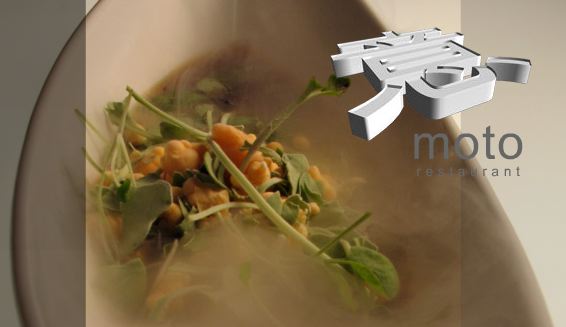
Here in Chicago, interested parties can experience molecular gastronomy bliss at Moto (google map).
You don't just eat chef Homaro Cantu's food. You gape in disbelief as you are instructed in how to handle his offbeat creations with even more peculiar utensils: The whole thinking is like a three-star science lab. (from one of many reviews of the restaurant)
I experienced the 10 course meal there recently. The meal began with an tasty edible menu nestled on top of a micro-salad. I don't want to give away all the good parts, but let's just say the meal included lasers, liquid nitrogen, and dehydrated macaroni. It was an (albeit pricey) experience I would enthusiastic recommend.

Wednesday, June 6, 2007

moving giant marine animals

When I read that two new whale sharks arrived at the Georgia Aquarium on Friday, June 1st, while the recently-born beluga whale is making plans to leave the Shedd Aquarium in Chicago some time this summer, I couldn't help but wonder - how do you transport these giant animals?

Well, the two whale sharks were flown 8,000 miles from Taipei, Taiwan on a specially-designed cargo plane with 20-foot-long fiberglass tanks with oxygen machines and other equipment to keep them healthy on their trip. When they arrived in Atlanta, Georgia, their tanks were transferred to two flatbed trucks and driven to the aquarium surrounded by an escort of Atlanta police cars with their blue lights flashing. (video) They will join three other whale sharks in their new home in a 6 million gallon tank.

Qannik, the male Beluga whale born back in August, 2000, is leaving Chicago and heading for Tacoma, Washington's Point Defiance Zoo. Qannik's mother, Mauyak, is pregnant again and expecting the new calf this fall. The mother/son bond between Qannik and Mauyak has all but disappeared as he grows into a sexual mature adult, and he must leave the facility to avoid interbreeding between him and his mother. Qannik is now 11 feet long and weighs about 1,000 pounds. In his new home, he will live in a whale pool with Beethoven, a 14-year-old 1,600-pound male beluga.

Qannik will travel in a specially-designed freight plane, riding in a "custom-made, fleece-lined sling suspended in a shallow tank of ice water." Trainers at the Shedd have been putting Qannik in and out of the sling repeatedly this year, using it for check-ups and exams, which will help Qannik be more comfortable with the device during his trip.

UPDATE (6.11.07) Qannik has arrived at the Tacoma zoo!
The aquarium kept the timing of Qannik's move under wraps to stave off protests, officials told The News Tribune of Tacoma for a story posted on the paper's Web site Sunday.

The whale
traveled inside an "enormous, foam-padded plastic tank in the DC-8 plane for a flight that cost $84,000." The zoo website has posted photos of Qannik's adventures!

Tuesday, June 5, 2007

so many deformed cicadas

A student asked me why there are so many deformed cicadas. You know, the ones with the shriveled wings, or even the ones who harden halfway out of their old exoskeletons. I read more in the Chicago Gardener blog. (You might want to check out the rest of the cicada posts too!)

John Cooley, a biologist at the University of Connecticut says it is not the lawn chemicals doing the damage, although humans are the ultimate culprit.

When cicada nymphs emerge, they must find something vertical to climb and stake out perching places to molt. At its perch, each cicada slips out of its nymph shell and then must hang undisturbed on that perch until its new exoskeleton unfolds and begins to harden properly. If it is disturbed during that time, its exoskeleton will be deformed ("faulty ecdysis," to the scientists).

In regular woody settings, there are plenty of trees, shrubs and tall grasses to support the cicada population. But here in the suburbs, yards are carefully landscaped, with neatly trimmed lawns and a few strategically placed trees and bushes, which limits the number of perches for the nymphs to hang on.

Since many cicadas must crawl onto the same places, they often bump into or climb over each other. This is a problem for those light-colored, recently molted cicadas who are waiting for their exoskeletons to harden. At the delicate stage when they must hang undisturbed, they are finding themselves trampled by other cicadas. This causes the many deformed cicadas.

The University of Connecticut Dept. of Ecology agrees,
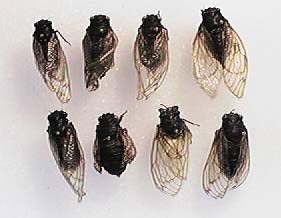
"Cicadas sometimes fail to properly inflate their wings after molting; such individuals can be found in low vegetation in any emergence.... The cicadas in the picture below came from a 1990 emergence in a suburban front yard near Chicago. Many of the cicadas in this area had deformed wings. Possible explanations include crowding (during molting) and use of lawn chemicals."


A University of Illinois entomologist believes it is normal to have so many deformed cicadas, although normally predators would eat them before we would see them. However, with these cicadas, there are so many insects, the predators can't keep up! (
Chicago Cicada Central)

Wednesday, May 30, 2007

our ginkgo tree

The Ginkgo tree is one of the oldest trees on earth. Fossils of Ginkgo relatives have been found in rocks dating back 270 million years. For centuries, people thought the Ginkgo was extinct, until is was found growing in remote parts of China in the mid-1700s.

The word Ginkgo comes from a misspelling of the Japanese word "ginkyo" or "silver apricot." Other people attribute the word to the older Chinese word meaning "silver fruit."

Not that you'd want to hang around the fruit of the female ginkgo tree. While most plants are hermaphrodites, ginkgos have separate male and female trees. The female trees produce fruit that become a mushy, foul-smelling mess on city sidewalks in the fall. The fruit contains butanoic acid, which makes it smell like rancid butter. For this reason, landscape suppliers will only sell male cultivars, or trees that are male clones of existing trees, to ensure maleness. Don't know if your Ginkgo is male or female? Don't let a few years of non-smelliness convince you - female trees will not fruit for 20 years more. (Ours is a male cultivar.)

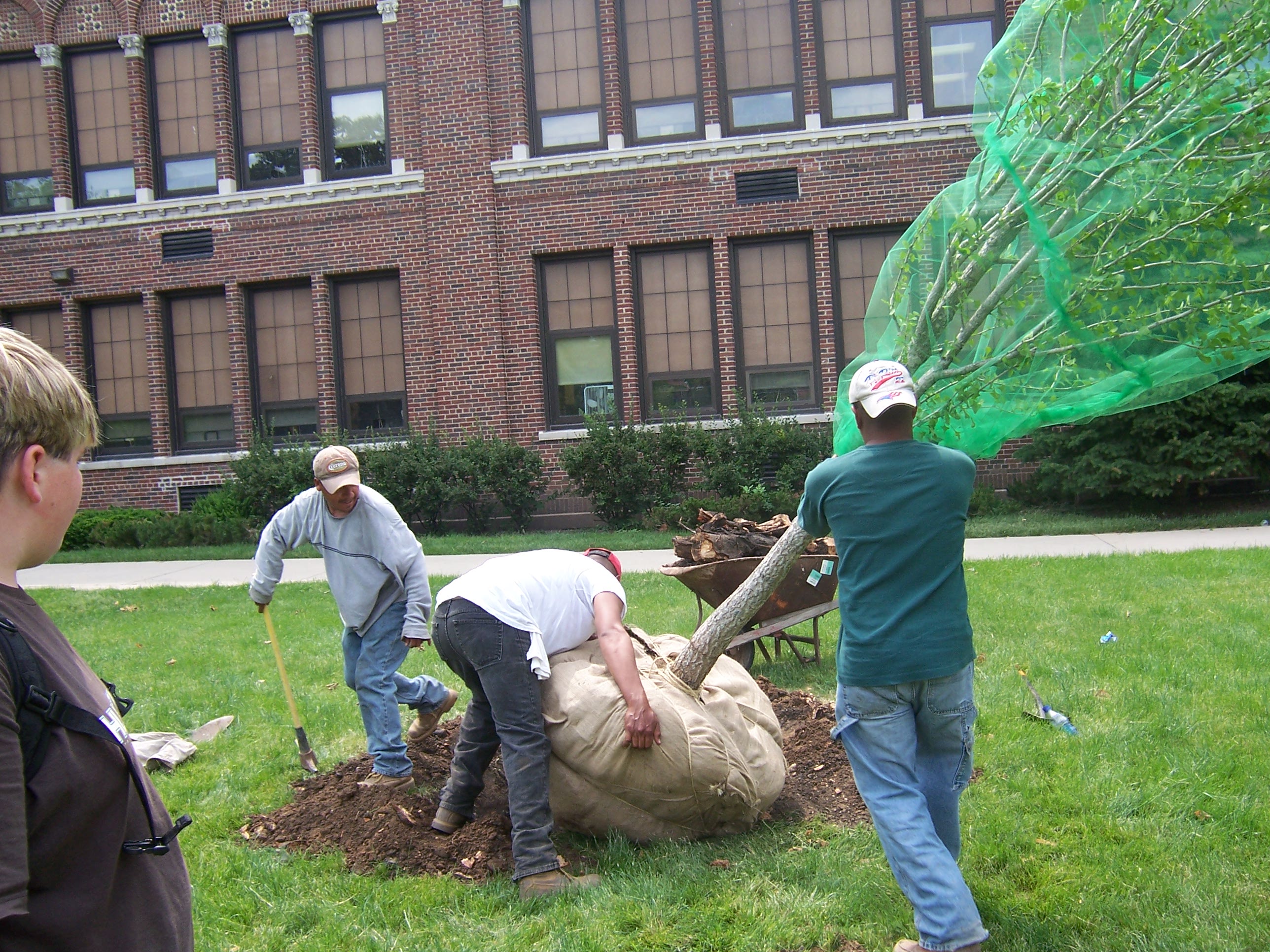
Ginkgos are very successful in urban settings and are well-known for being disease and pest-free. (Although, I am not sure they are immune to the ovipositors of the female cicadas. That's why we decided to cover our new Ginkgo for the duration of the 2007 periodical cicada emergence!)

Ginkgos are deciduous dioecious gymnosperms (deciduous = they lose leaves yearly, dioecious = male and female are separate, gymnosperm = "naked seed," meaning their seeds are not encased in ripened fruit, although the females do not produce actual cones.)

Kingdom Plantae -- Plants
Subkingdom Tracheobionta -- Vascular plants
Superdivision Spermatophyta -- Seed plants
Division/phylum Ginkgophyta -- Ginkgo
Class Ginkgoopsida
Order Ginkgoales
Family Ginkgoaceae -- Ginkgo family
Genus Ginkgo L.


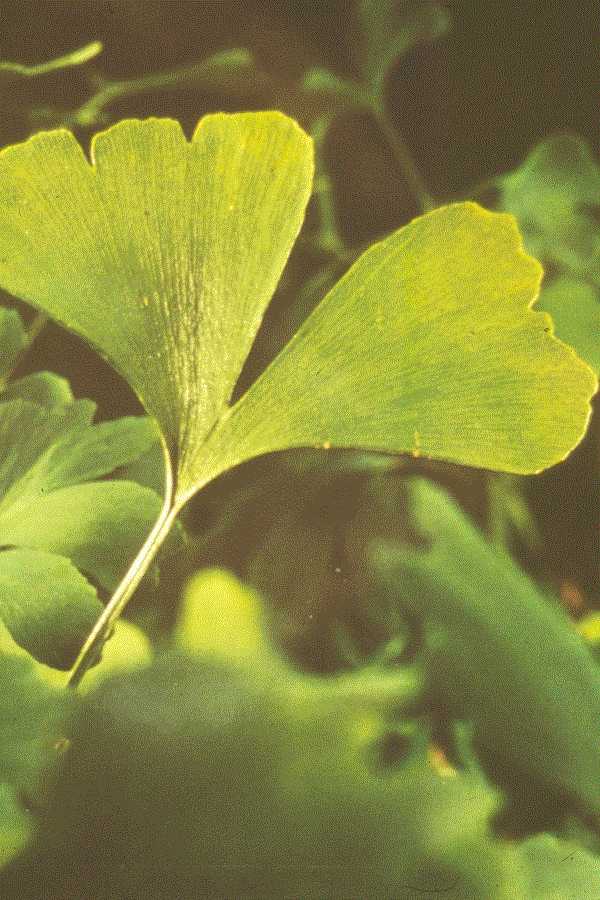
The only living member of the Order Ginkgoales is the Ginkgo biloba! The word biloba means "two-lobed" and refers to its distinctive leaf shape.

Many people take Ginkgo biloba extracts (widely available at drugstores) for a variety of health issues, however, most often as a memory enhancer (to improve memory). "Some smaller studies for memory enhancement have had promising results, but a trial sponsored by the National Institute on Aging of more than 200 healthy adults over age 60 found that ginkgo taken for 6 weeks did not improve memory," as reported in a 2002 JAMA article.

SOURCES: Ohio State Horticulture Page, National Institute of Heath (NIH) Ginkgo Fact Sheet, The Ginkgo Pages.

Saturday, May 12, 2007

bad day at the fish farm

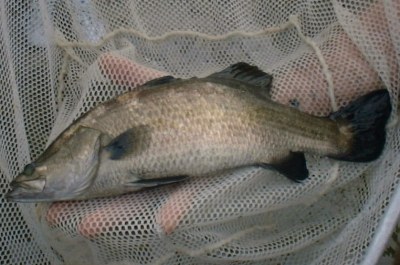
If I ever think I'm having a bad day at work, I will think of this story. Four workers in Turners Falls, Massachusetts fell into a 18-foot filtration tank filled with a mixture of sandy fish feces. The workers were standing on a pad, attached to the tank by a bracket, when the bracket broke, plunging them into the vat of fish waste. The men were rescued, treated and expected to be fine.

Turners Falls Fire Capt. David Dion comments, "It was very slimy and it was heavy," he said. "Never seen anything like it in my life."

The Australis Aquaculture fish farm in Turners Falls farms barramundi, a replacement for grouper. While we're on the topic, did you ever think of where your fish comes from? There are two types, wild and farm-raised. While fishing fish in the wild can quickly destroy ecosystems (think Happy Feet), farm-raised fish can cause similar havoc.

According to a 2002 article in Time Magazine, aquaculture (as opposed to agriculture) is already the world's fastest-growing food industry, with production increasing more than 10% a year. This is good because "about half the world's wild fisheries have been exhausted by overfishing. In the North Atlantic, one of the most depleted oceans, populations of popular fish are just one-sixth of what they were a century ago." Theoretically, when you eat farm-raised fish, you are saving a wild fish from being removed from the wild.

In fact, ecologists and economists warn that, at the current rate without any changes, the world will run out of seafood by 2048. According to the Washington Post, "the journal Science, concludes that overfishing, pollution and other environmental factors are wiping out important species around the globe, hampering the ocean's ability to produce seafood, filter nutrients and resist the spread of disease."

However, there are many critics of fish farming. According to that same Time article, Otto Langer, a biologist who worked 30 years for Canada's Department of Fisheries, says "a large salmon farm may pour as much liquid waste into the sea as a small city." Not only can fish farms contribute to polluting the waters, but they deplete the supply of wild fish in order to feed their farm-raised counterparts. This leads to some pretty unnatural stuff.

Because salmon are voracious eaters of smaller species, it takes several pounds of wild fish, ground up into meal, to yield 1 lb. of farmed salmon — an exchange that depletes the world supply of protein. The diet of farmed salmon lacks the small, pink-colored krill that their wild cousins eat, so the flesh of farmed fish is gray; a synthetic version of astaxanthin, a naturally occurring pigment, is added to the feed.
Also consider the effects of disease, parasites, severe overcrowding of fish, and the antibiotics (farmers give to protect their fish) leaking into the waters.. Also there are potential problems when farm-raised fish escape into the wild, interfering with the natural ecological balance of the area.

Shrimp are particularly damaging to the environment. Shrimp farms can actually raise the salinity of surrounding waters, and the waste run off can kill trees in area. Interestingly enough, Time has some praise for particular invertebrate farms.

On an eco-friendly scale, bivalves generally rate highest among the more than 220 species of fish and shellfish that are cultivated commercially. Mussels and oysters are filter-feeders that make the surrounding water cleaner, so small-scale farming of them is not usually harmful to the ecosystem.

Tuesday, April 10, 2007

the cicadas are coming

Brace yourselves, Chicagoland, because the cicadas are back! The Chicago Tribune recently published an article about the upcoming infestation of cicadas (which happen to be in the Arthropod phylum).

Cicadas are often mistaken for locusts, but they're actually they are related to leafhoppers or aphids. (Watch a video of actual locusts here.) Locusts are grasshoppers that often travel in vast swarms. Because periodical cicadas appear in such large numbers, early European settlers in North America connected cicadas to the plague of locusts mentioned in the Bible. Cicadas are not locusts.


There are some great articles to help you learn how cicadas work. Basically, they work on a 17 or 13 year life cycle. They won't hurt you. Cicadas do not sting or bite, and their diet consists of the sap from plants. The very loud sound you will hear (mostly during the heat of the day) is actually the mating call of the male cicadas. The sound is not produced by vocal chords, but rather by the buckling of the ribs, the vibration of a membrane and amplification in the cavities of the cicada's abdomen. (You can visit the University of Michigan zoology site to find audio files from various types of cicadas.)

(click image to enlarge)
After they sing, the cicadas mate. Afterwards, adult female cicada lay eggs by piercing plant stems and inserting the eggs into the slit created in the stem. The eggs eventually hatch into small, wingless cicadas known as nymphs. The nymphs eventually fall to the ground and dig below the surface. Here they stay for 17 years, slowly growing into adults. The nymphs live on the sap from plant roots while they grow. When the nymphs reach full size, they dig their way to the surface with specially adapted front legs that act as tiny shovels. The nymphs then climb to higher ground and shed their skin for the last time. (see YouTube video) Now they are fully-winged adult cicadas. - How Stuff Works
Watch an amazing movie on the life cycle of cicadas.
(click image to enlarge)

There are two main types of cicadas: "annual" cicadas, which are around in small numbers each year, and "periodical" cicadas, which come out in a giant, synchronized mass every 13 or 17 years. I learned that there are believed to be 13 broods of 17-year cicadas in North America. (I also learned you won't find periodical cicadas on any other continent!) The respective 17 and 13 year broods of any one species only overlap once every 221 years, i.e. broods V and XXII emerged synchronously in 1897 and will not do so again until 2118." (source: Gordon's Cicada Page) Check out this great interactive map to learn more about broods and when they might be in your area!

The last brood to emerge was Brood X (brood #10), which came up in the spring of 2004 in the eastern US. The group of cicadas that will be seen in Chicago this May are named Brood XIII (or brood #13). The last time they surfaced (if you do a little mental math) was in 1990, when I was a freshman in high school! Hey, to celebrate this historic moment in your middle school lives, you may want to order your Brood XIII T-shirts now!

They will surface when the ground temperature reaches about 60 degrees Fahrenheit. With any luck, they will be here just in time for all those Memorial Day picnics....

More information on Brood XII (and local cicada events) can be found on the following sites:

Great presentation from Indiana University

The Lake County Forest Preserve
The University of Illinois Cicada Page
ABC News (with video)
Cicada Mania

And, it's not very nice, but you can play Swat the Cicada on your computer.

The University of Maryland even provides cicada recipes for your dining pleasure. It is said they taste like asparagus or clam-flavoured potato.NPR posts just one of their many recipes: (whoa - read the "before you begin")

Disclaimer: the University of Maryland does not advocate eating cicadas without first consulting with your doctor. While many people do eat cicadas, there is no guarantee that they are safe for every person to eat. As with all foods, it is possible that certain individuals will have allergic reactions to substances within the cicada.

Soft-Shelled Cicadas

Ingredients:

1 cup Worcestershire sauce

60 freshly emerged 17-year cicadas

4 eggs, beaten

3 cups flour

Salt and pepper to season the flour

1 cup corn oil or slightly salted butter

Directions:

Marinate cicadas alive in a sealed container in Worcestershire sauce for several hours. (Note: You can skip this step and go directly to the egg step instead.)

Dip them in the beaten egg, roll them in the seasoned flour and then gently sauté until they are golden brown.

Thursday, April 5, 2007

$25 million global warming prize

A British billionaire Richard Branson teamed up with Al Gore to offer a $25 million prize to anyone who can develop a way to remove carbon dioxide gas from our atmosphere.

Gore and Branson said that although scientists are working on technologies to capture carbon dioxide and other greenhouse gases at power plants and other industrial sources, no one has developed a strategy to remove gases already released into the atmosphere.

The winner of the contest must devise a plan to remove greenhouse gases from the atmosphere without creating adverse effects. The first $5 million would be paid upfront, and the remainder of the money would be paid only after the program had worked successfully for 10 years.

Another article tells that "Scientists have been looking into removing the greenhouse gas from the atmosphere and storing it in oil and gas fields, injecting it deep into the ocean, or chemically transforming it into solids or liquids that are thermodynamically stable."


So what exactly is up with all this talk about "greenhouse gases" like carbon dioxide?

The greenhouse effect is responsible for the Earth being warm and for us being able to live there. Gases in the atmosphere surround the earth and trap heat, just like the glass in a greenhouse traps heat for plants and flowers. The Earth is about 60° F warmer than it would be without these protective gases.

The sun sends light and radiation toward Earth. When the sun's rays reach the atmosphere, some of the radiation bounces off the layer of gases and back into space. Some of the sun’s rays pass through the atmosphere and are absorbed by the land and water. The Earth changes this radiation to heat.

“Greenhouse gases” take in any extra radiation and release more heat, which also raises the temperature of the Earth's surface. This is how greenhouse gases “trap” heat to warm our planet.

Or, if you prefer, watch this animated guide to the greenhouse effect.

Greenhouse gases include carbon dioxide, water vapor and ozone. Carbon dioxide makes up almost 84% of all the greenhouse gases we produce. And guess how we produce it?

➢ burning gasoline to drive cars and trucks
➢ burning oil, coal or wood to produce electricity for heating, cooling, and other purposes
➢ burning forests to clear land

Since I do not foresee us not driving cars, building buildings or heating and cooling our homes, maybe Branson has a good idea. If getting people to stop producing carbon dioxide is a daunting task, why not develop ways to get rid of it once we produce it? NASA/World Book has great information about alternative energy sources (not creating so much carbon dioxide) and carbon sequestration (getting rid of it once we produce it).

Anyone looking for $25 million can get more information here.