Wednesday, August 29, 2007

toliet paper wedding gown


Well, I thought the duct tape prom dresses were cool, but today I found out there is also a contest sponsored by Cheap-Chic-Weddings.com that challenges contestants to create a "a wedding gown and headpiece that you have constructed out of toilet paper, tape and/or glue ONLY."

Check out these winners from 2007, 2006, and 2005. Impressive.

Sunday, August 26, 2007

how does a word get into the dictionary?

Each year, the Merriam-Webster dictionary has to decide which new words should be added to the dictionary. 2007's additions include crunk, DVR, ginormous, sudoku, speed dating and telenovelas. (2006's new words includes drama queen, unibrow and supersize)

Of course, I always ask, "how does a word make it to the dictionary?"

Many of these words have been around for a while. (In fact,
Merriam-Webster traces ginormous back to 1948, when it appeared in a British dictionary of military slang!) However, just because a word is used, doesn't mean it will make it into the dictionary. Editors who work for the dictionary spend a few hours each day reading magazines, newspapers, and electronic publications, checking for new words or variant spellings of existing words.

If they find a word of interest, they will write a citation for it. Later, definers go through the citations and decide which words should be included. It doesn't matter how often a word is cited, because it may only be found in very specific writings (like only scientific journals or only rap lyrics). To be included in a Merriam-Webster dictionary, a word must have a number of citations that come from a many different types of writing over a long period of time. The word must be used long enough and in enough variety such that the word's meaning is clear.

The number and type of citations needed to add a word to the dictionary varies. In some cases, a word comes on fast and widespread, and its meaning is clear and uncontroverted. This was the case in the 1980s with the word AIDS. In such a situation, the editors may decide to include the word, even though it has not been in use for a long period of time.

Still interested? There's even a "new word watch" blog! (Scroll down to view most recent posts.)

Wednesday, August 15, 2007

itch mite in chicago

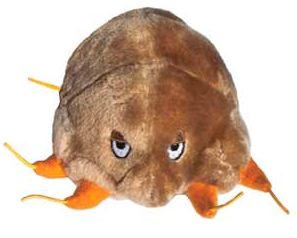
I have been hearing from a number of folks back home that there is an outbreak of itching in the Chicagoland area. Of course, I am always in the mood for a good arthropod story, so I looked into it. (Ends up the bites are caused by arachnids, though, and not insects!)
"We don't have positive identification on the type of mite that it is. We do know that it is a mite," said Kitty Loewy, spokeswoman for the Cook County Department of Public Health. (Tribune)

Monday night, authorities left glue traps in forest preserves and other wooded areas. On Tuesday, they still didn't catch any; they think because the mites are "too small." But anyone bit by these insects are showing the telltale rash that develops 10 - 12 hours after being bitten. (The rash is a reaction to toxins in the mite's saliva as they gnaw on you as they look for larvae that aren't there. The toxin is potent (for insects at least). One mite’s bite can kill an insect larva 170,000 times its own weight.)

In the suburbs, Dr. George Tsoutsias said "Patients were actually comparing their lesions out in the waiting room," said. He saw 32 cases this weekend in the Adventist La Grange Memorial Emergency Department.

Investigators think this outbreak may be caused by an itch mite from Europe—the oak leaf gall mite, Pyemotes herfsi, a relative of the straw itch mite (which farmers have dealt with for years). It feeds on midge larvae in oak trees, falling when it runs out of food, often right onto people passing below. Scientists say these European arthropods may have hitched a ride here due to increased worldwide shipping and transportation that moves new species around the world. Kansas knows all about this, since they dealt with an outbreak in 2004. (The Pittsburg State University has a site with plenty of pictures and Quicktime videos of both the bites and the bugs.)
Information provided by entomologists indicated that these mites were associated with a gall-forming insect (a small fly called a "midge") that causes swellings along veins of oak leaves.

The female midges lay eggs on the leaf surface, and the young midges crawl to the edge of the leaf or along a vein where they secrete chemicals that cause the leaf tissue to curl up into a cylinder-like gall protecting the midge larvae inside.

The itch mites prey on these midges, invading the galls, where they feed on the midge larvae and begin to reproduce. Each female mite can produce up to 250 adult offspring, most of which are females. Each generation requires only seven days, which helps explain the large population numbers that have been encountered where the problem has been serious. (like Chicago right now)

Kansas State University describes the mites' bizarre life cycle as they researched the 2004 Kansas outbreak:

The mite’s life cycle is unusual. A mated female searches for a host on which to feed. She is small enough to be carried by the wind. If she finds a rolled leaf (gall) on an oak tree, she enters the gall. If she finds midge larva, she inserts her mouthparts into the larva. Within minutes, a potent neurotoxin in her saliva paralyzes the midge larva, who will die of starvation.

Once the female starts to feed, she can develop as many as 250 offspring. In seven days, her “abdomen” is fully distended, and her young -- of which only 5 to 10% are males -- are ready to emerge as fully developed adults. Males emerge ahead of the females, and mate with the females as they emerge from the mother and die shortly after. The females complete the cycle by dispersing in search of new hosts.

Luckily, the bites are not medically dangerous, just annoying (see video), unless people scratch enough to damage their skin, allowing bacteria to get in and cause a secondary infection. Unfortunately, bites can continue to itch for 10 - 14 days. To prevent the bites, scientists suggest wearing long clothing and insect repellent with DEET while outside, and washing clothes immediately after coming indoors. To treat them, doctors recommend using hydrocortisone cream and antihistamine.

At first, some people were hypothesizing that the outbreak had something to do with the cicada emergence earlier this summer (maybe the cicada larvae are a food source since they hatch 6-10 weeks after being deposited in the branches, and fall to the ground? Gross.). But, according to NBC, seven other states are dealing with similar outbreaks. They are Texas, Nebraska, Kansas, Missouri, Ohio and Kentucky, so this is probably not the case. (The cicadas were mostly in northern Illinois and southern Wisconsin.)

UPDATE (Chicago Tribune 12/15): I guess sometimes these mites COULD munch on cicada larvae. Field Museum entomologist Daniel Summers says the mite also finds immature members of the Homoptera family to be delectable, he said.

That family includes the periodic cicadas, the noisy bugs that flooded the Chicago area to mate earlier in the summer. The next generation of nymphs are emerging now, presenting an irresistible food source to any Pyemotes mite looking for something to eat.

"They're hatching out right now in the forest preserves by the countless zillions," Summers said. "It would be an endless feast for them. That would be my best guess right now."

Monday, August 6, 2007

mccarrots taste better?

Now, you may have already heard this one on the news, but it's pretty incredible. The August issue of the Archives of Pediatrics & Adolescent Medicine published an article demonstrating the power of advertising to small children. (You can read more about this study in Forbes or the Associated Press)
By the early age of 3 to 5 years, low-income preschool children preferred the tastes of foods and drinks if they thought they were from McDonald’s, demonstrating that brand identity can influence young children's taste perceptions. - Pediatr Adolesc Med.

I was a little surprised the
San Mateo County, CA experiment was limited to low-income kids, but the study author, Dr. Tom Robinson, allegedly believes the results would be similar for children from wealthier families.

Five foods were tested. The chicken nuggets, hamburger and french fries were all from McDonald's; the carrots and milk were from a grocery store. Kids sat behind a white screen, and were handed two identical samples of food, one coming out of a plain paper bag, wrapped in plain paper, while the other came out of a McDonald's bag, wrapped in similarily-labeled paper. If kids did not immediately recognize the symbol (around 25% of the time), a researcher would tell them which one was from McDonald's.

The independent variable in this case was the packaging for the food, while the dependent variable was the kid's preference of food. (Kids also had the option of saying the two samples tasted the same.) The researchers made great efforts to control their experiment,
I recommend reading the methods section of the study to read the details. In fact, the whole study is pretty intense. For such a simple-sounding experiment, there is still a lot of serious scientific method involved. The write-up includes statements such as, "The 63 children performed a total of 304 individual tasting comparisons. Three, 2, 3, 1, and 1 child were not allowed to eat hamburger, chicken nuggets, french fries, milk, and carrots, respectively, and 1 child was unable to bite the carrots. "

The results?
  • 77 percent said the labeled fries tasted best while only 13 percent preferred the others
  • 54 percent preferred McDonald’s-wrapped carrots versus 23 percent who liked the plain-wrapped sample
  • The only results that were not overwhelmingly clear involved the hamburgers, with 29 kids choosing McDonald’s-wrapped burgers and 22 choosing the unmarked ones.
  • Less than 25% of the children said both samples of all foods tasted the same.
As with any science experiment, the results inspire more questions and opportunities for further experimentation. Pradeep Chintagunta, a University of Chicago marketing professor, makes an excellent point when he said a more fair comparison might have compared kids’ preferences for the McDonald’s label versus another familiar brand, such as Mickey Mouse. It would be interesting to see if it is specifically the lure of McDonalds, or the power of any advertising that yields these results. And of course, I would be interested in the author's presumption that the results would be similar with middle- to upper-class children. Would early exposure to Whole Foods and fine dining make a kid less susceptible to McDonald's advertising?

Finally, the whole things makes me consider the power of advertising in older kids (and adults). All I have to do is consider fads like Ugg boots....

Wednesday, July 25, 2007

underwater restaurant in the maldives

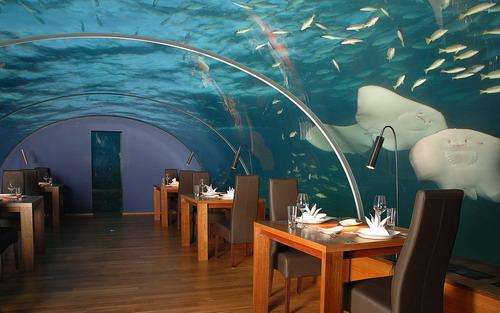
Did you know there is a restaurant completely underwater? (This is the strangest thing I have heard about since the first ice hotel!)

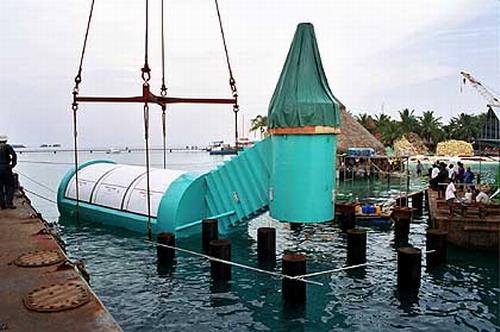
The Ithaa Restaurant (Ithaa means “pearl” in the Maldives) is located 15 feet below the surface of the Indian Ocean, and is surrounded by a coral reef (article). It is part of the Hilton Maldives Resort & Spa Rangali Island and was built in April 2005. It must be a rare treat, since it can only fit 14 people at a time and costs $170 - $250 per person.

Tuesday, July 24, 2007

sony bravia 's exploding colors

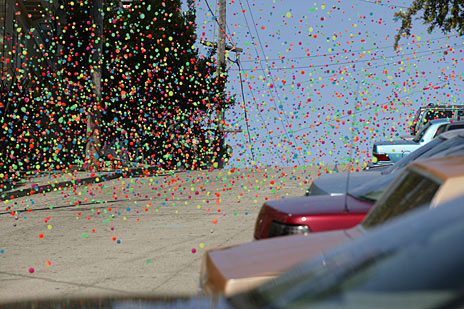
Sitting around talking in San Francisco one evening, this guy brought up a Sony ad involving and a hilly San Francisco street and superballs. (I don't know if the ad runs in the U.S. ... As you know, I can't remember the last time I turned on a TV.) Intrigued, I wanted to learn more. These ads ended up being even more awesome than I imagined! (And done without computer graphics.) Sony's BRAVIA brand uses the slogan "Color like.no.other."
To announce the arrival of the BRAVIA LCD and 3LCD range, we wanted to get across a simple message - that the colour you'll see on these screens will be 'like no other'. - Bravia site

AMAZING / CRAZY COMMERCIAL #1: BALLS

So, the first commercial (filmed in 2005) features 250,000 superballs, a kid, and one frog. It took 23 people to film and "only one chance to get [the main sequence] right". With a combination of trucks and air cannons, the balls were released. Although pretty to look at, "these balls can do some damage, so all the cars were props and crew members went so far as to having protective shields and crash helmets."

Watch the BALLS commercial.
See behind-the-scenes.
Read more about it.

Read about the British soft drink's spoof of the ad.

AMAZING / CRAZY COMMERCIAL #2: PAINT

This one (July 2006) was filmed in Glasgow, Scotland and took 10 days, 250 people (to film), and 70,000 liters of paint. (The cleaning took 5 days and 60 people!) And of course, as in all experiments, "safety first."
Keeping everyone safe was also an important factor. A special kind of non-toxic paint was used that is safe enough to drink (it contains the same thickeners that are sometimes used in soups). It was also completely harmless to the skin.

Watch the "PAINT" commercial.
See behind-the-scenes.
Read more about it.

If I watched TV, these ads might make me go buy one. :)

Friday, July 20, 2007

my first earthquake

This morning, at 4:42 am (PT), the U.S. Geological Survey reported that a 4.2-magnitude earthquake shook the San Francisco area. (read article) The quake originated about two miles east-northeast of Oakland, at a depth of 3.6 miles. Oakland is just east of San Francisco, across San Francisco Bay. I remember feeling my bed shake, waking up, and wondering if it was an earthquake. However, when I saw the clock said 4:44 am, I decided leave the investigating until the morning.

According to the USGS, "Each year the southern California area has about 10,000 earthquakes. Most of them are so small that they are not felt. Only several hundred are greater than magnitude 3.0, and only about 15-20 are greater than magnitude 4.0. " Although San Francisco is not exactly southern California, the general idea is the same. There are many microquakes each day, but this morning's quake was an unusual one. (In fact, according to the USGS site right now, in the 12.5 hours since this morning's quake, there already have been 11 more earthquakes in California today!)

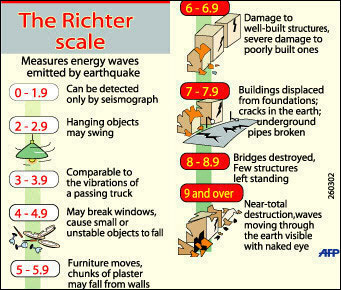
Earthquakes, as most of you know, are a consequence of moving tectonic plates and are measured using the Richter scale.
The Richter scale is a standard scale used to compare earthquakes. It is a logarithmic scale, meaning that the numbers on the scale measure factors of 10. So, for example, an earthquake that measures 4.0 on the Richter scale is 10 times larger than one that measures 3.0. On the Richter scale, anything below 2.0 is undetectable to a normal person and is called a microquake. Microquakes occur constantly. Moderate earthquakes measure less than 6.0 or so on the Richter scale. Earthquakes measuring more than 6.0 can cause significant damage. The maximum quake rating ever measured is about 8.9. - HowStuffWorks


(image borrowed from some guy's blog)

Wednesday, July 11, 2007

science across the usa

I haven't travelled much in my life, so it was a great "hands-on" opportunity to drive across the country this summer and experience earth science! I learned so much, and I would like to share one thing I learned from each of the amazing science sites I visited on my drive from Chicago to California. (All images are my own photos - feel free to click on any of them for a larger version.)
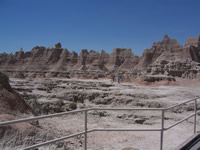
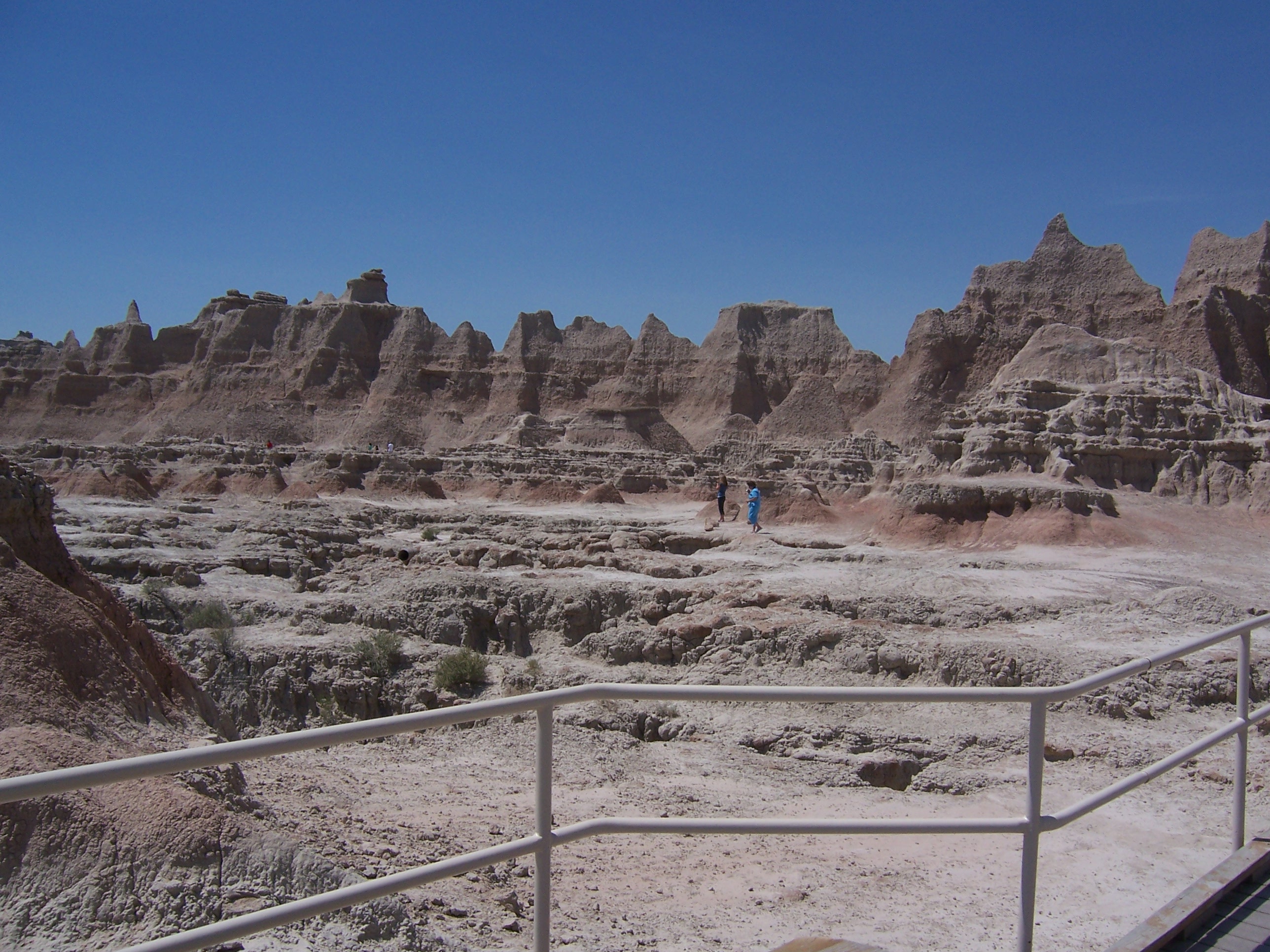
The Badlands (South Dakota) - This national park consists of nearly 244,000 acres of some of the most bizarre landforms I have ever seen. Here, rivers and rainstorms have been eroding away the soft sediments and volcanic ash, revealing colorful bands that correspond with specific time periods in the history of the rock formation.
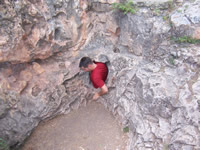
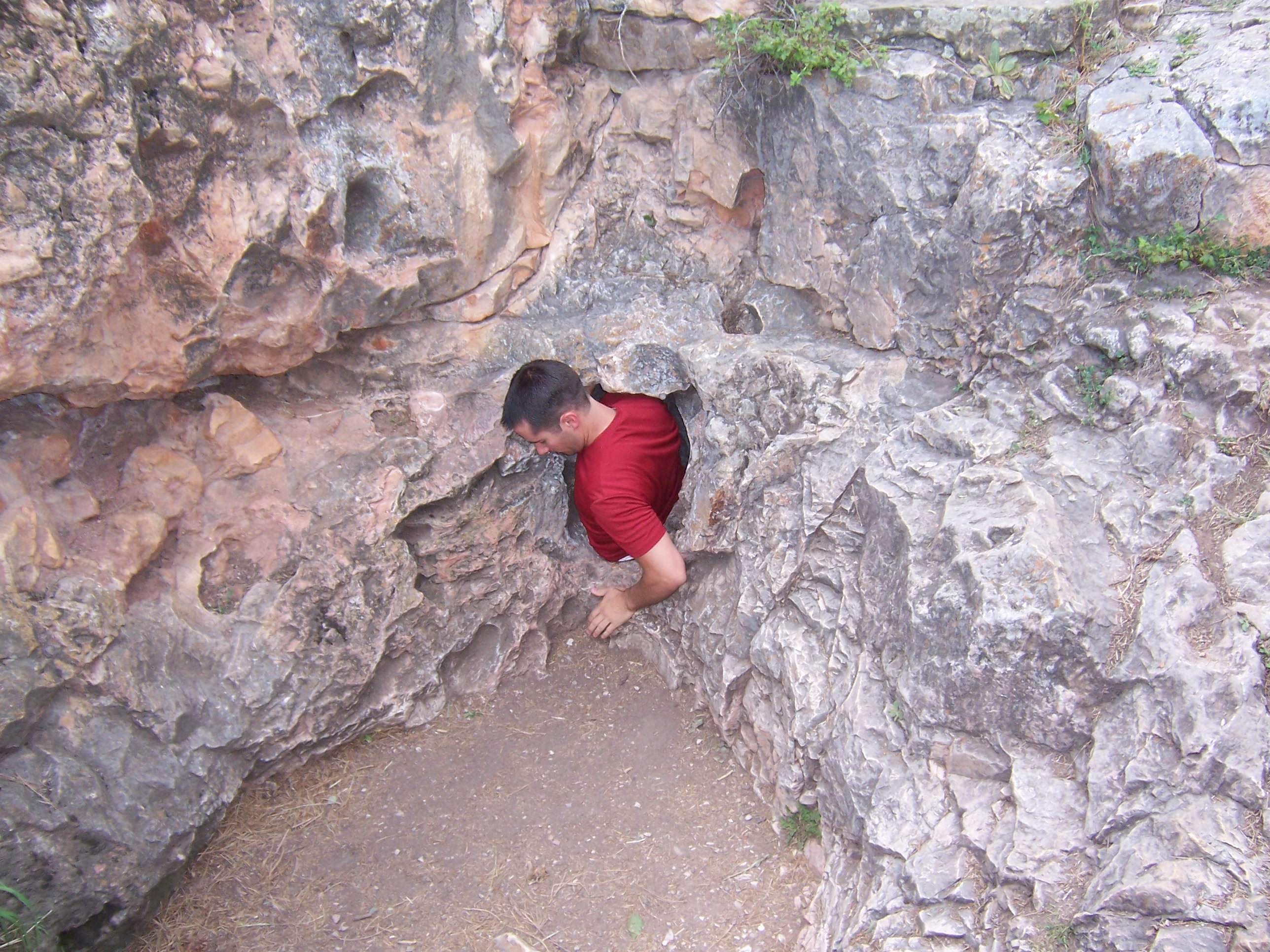
Wind Cave (South Dakota) - First explored by a 16 year old boy with a candle and a string, Wind Cave now has over 100 miles of known passageways, although studies indicate only about 5% of the cave has been discovered.

The most fascinating part of the cave is its entrance. The Lakota Indians have been long aware of this opening, and regard it as a sacred place. In the picture to the left, you can see a guy attempting to enter the natural entrance of the cave. (I guess he didn't care about the gate park rangers have installed to stop people from doing just that....) It is this opening (and not the cave's interior) that gives Wind Cave its name.

The wind moves depending on atmospheric pressure on the surface and inside the cave. When the pressure is higher outside than inside the cave, wind rushes into the entrances; when pressure is higher inside the cave, the wind blows out of the entrances.

The wind is driven by changes in barometric pressure. The air pressure within the cave and outside attempt to reach equilibrium. The wind blows into the cave when the barometer rises, and out when the barometer falls. This airflow may forecast how the weather is going to change. - nps.gov
This was confirmed on our visit by the presence of ominous clouds in the distance (storm approaching) and the strong winds blowing out of the natural entrance.
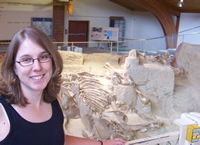
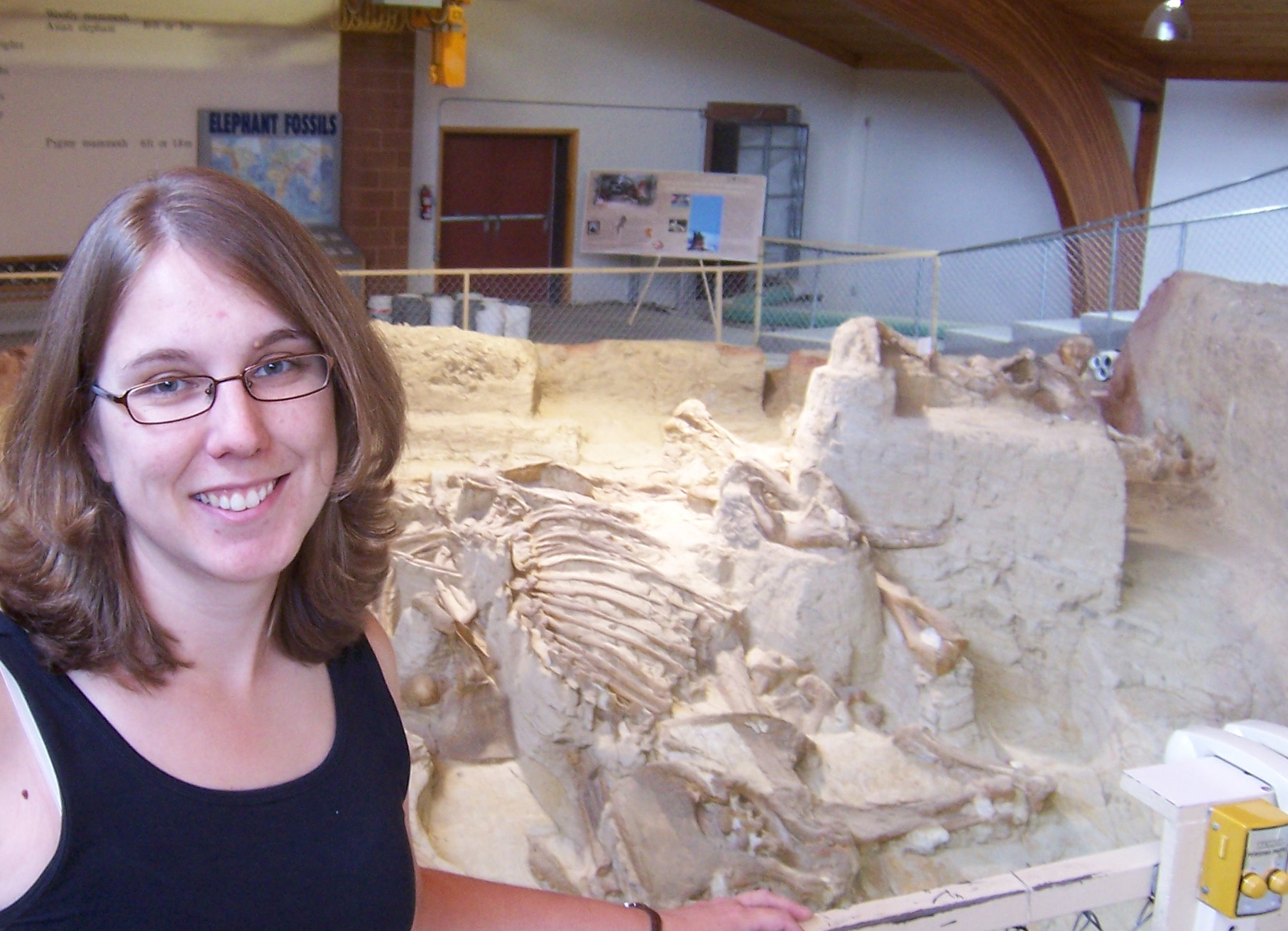
Mammoth Site (South Dakota) - More than 26,000 years ago, many large Colombian and woolly mammoths spent their time tediously scraping away the snow with their tusks to find food. However, scientists believe some mammoths were "lazy" and were instead lured by the more easily-accessible vegetation at the sinkhole's edge. Once these mammoths risked coming near the sinkhole's edge, it is believed they fell in, became trapped and died.

Scientists have found remains of 52 mammoths in the pit (which was discovered by chance in 1974 when they bulldozed to make a housing development). Of those 52 animals, ALL of them are male. And all, except one, are young ADOLESCENT males. Raleigh Philip, author of an educational neuroscience text, says, "It's interesting to speculate how the young Colombian Mammoths' adolescent brain may have led to their demise in the same way that teenagers take risks today."
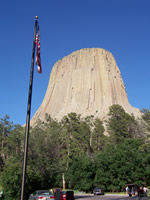
Devil's Tower (Wyoming) - Geologists agree that Devils Tower is the core of a volcano exposed after millions of years of erosion. However, there is still debate about the exact details of its formation. This bizarre land form has been somewhat of a mystery. Perhaps that is why Stephen Spielberg used Devil's Tower as an alien communication point in his movie Close Encounters of the Third Kind.

Also known as Bears Lodge, it is a sacred site for many American Indians. I personally like their legend the best.
In one story, two girls playing in the woods are chased by an enormous bear. The girls jump on top of a rock, but it is too small to give them safety. The Great Spirit sees the girls' predicament and causes the rock to grown to an immense size. The giant bear jumps at the girls, but cannot reach the top. His claws leave the gouges in the side of the rock that can still be seen today. - the Unmuseum
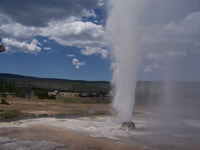
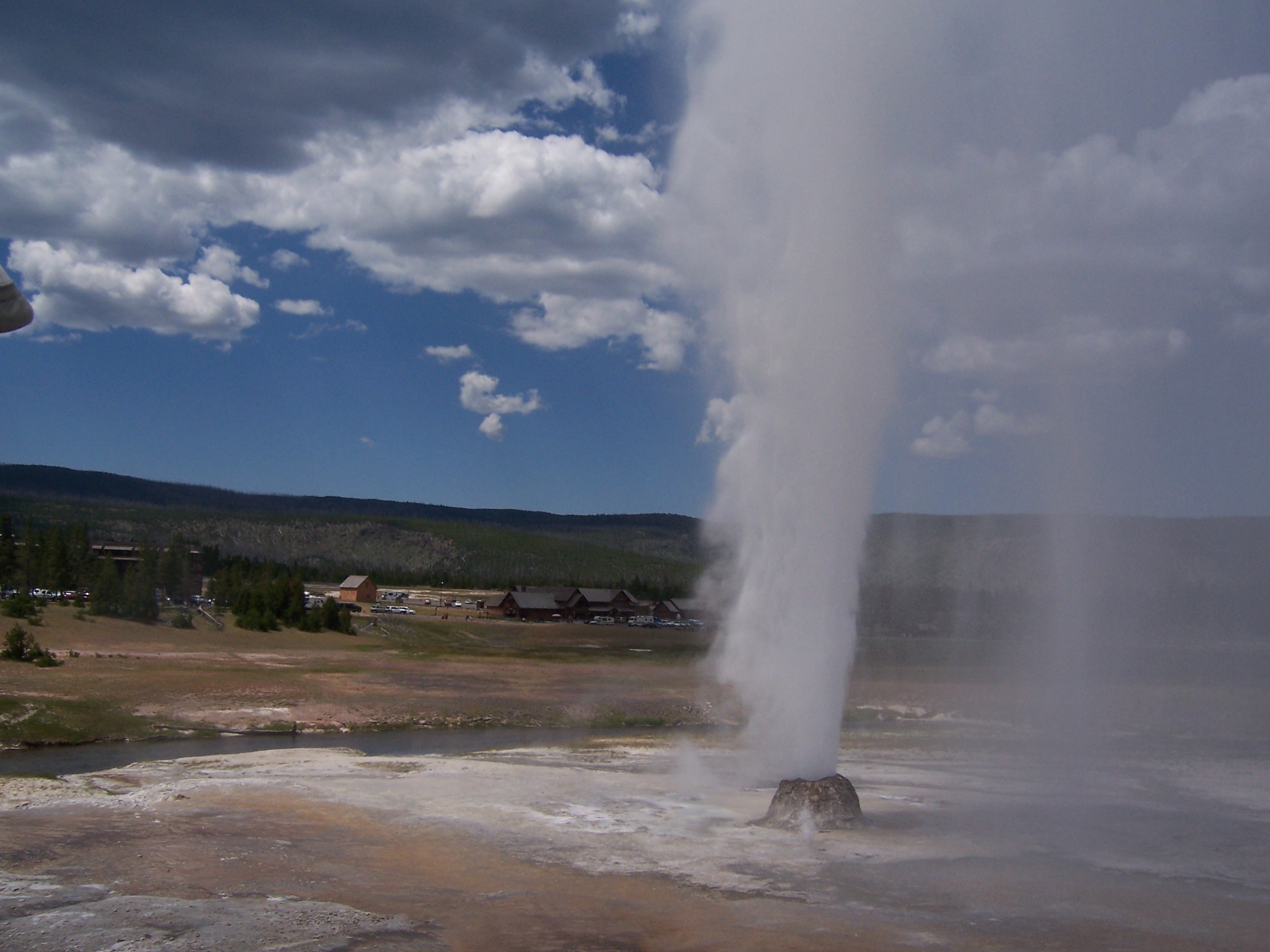
Beehive Geyser (Yellowstone Nat'l Park, Wyoming) - While Old Faithful is certainly the most famous geyser at Yellowstone, it is just one of the 10,000 geothermal features found in the park. The geyser in the picture is Beehive Geyser, an unpredictable cone geyser with water reaching 93 °C (199 °F) and eruptions up to 200 feet! A cool thing about this geyser is that there is a small vent located a few feet east of Beehive, called Beehive's Indicator, which erupts about 6 feet, 10-20 minutes before an eruption. When we walked by the sputtering indicator, we decided to stick around for the show!
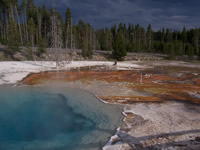
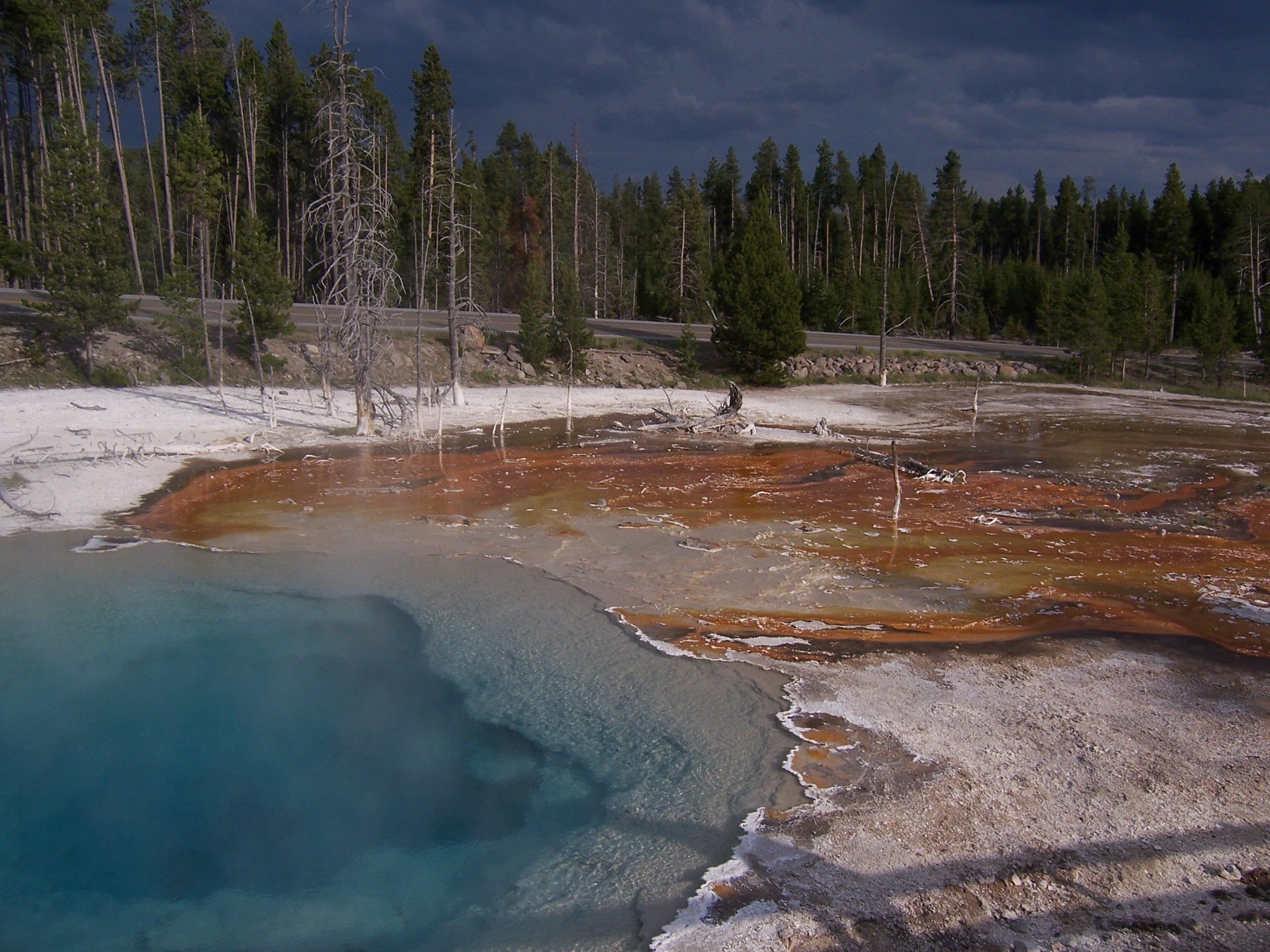
Yellowstone Nat'l Park, (Wyoming) - Thermophiles, or microbes that live in extremely hot conditions, make up these colorful bacterial mats. Pigments (like chlorophyll and carotenoids) within the microbes are responsible for their colors. The run-off channel from a hot spring, for example, is white or clear near its source. This water is heated by the magma just under the earth's crust! Only a few single-cell bacteria live in this boiling water, which is 93 °C (199°F). (Pure water boils at 212°F at sea level.) As the water slightly cools to 167°F farther downstream, the first colorful forms of bacteria show up. Shades of green to pink to orange to yellow-brown to gray indicate bacteria growing in slightly different temperature regions on the mat.
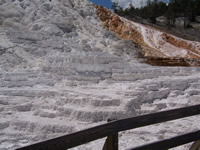
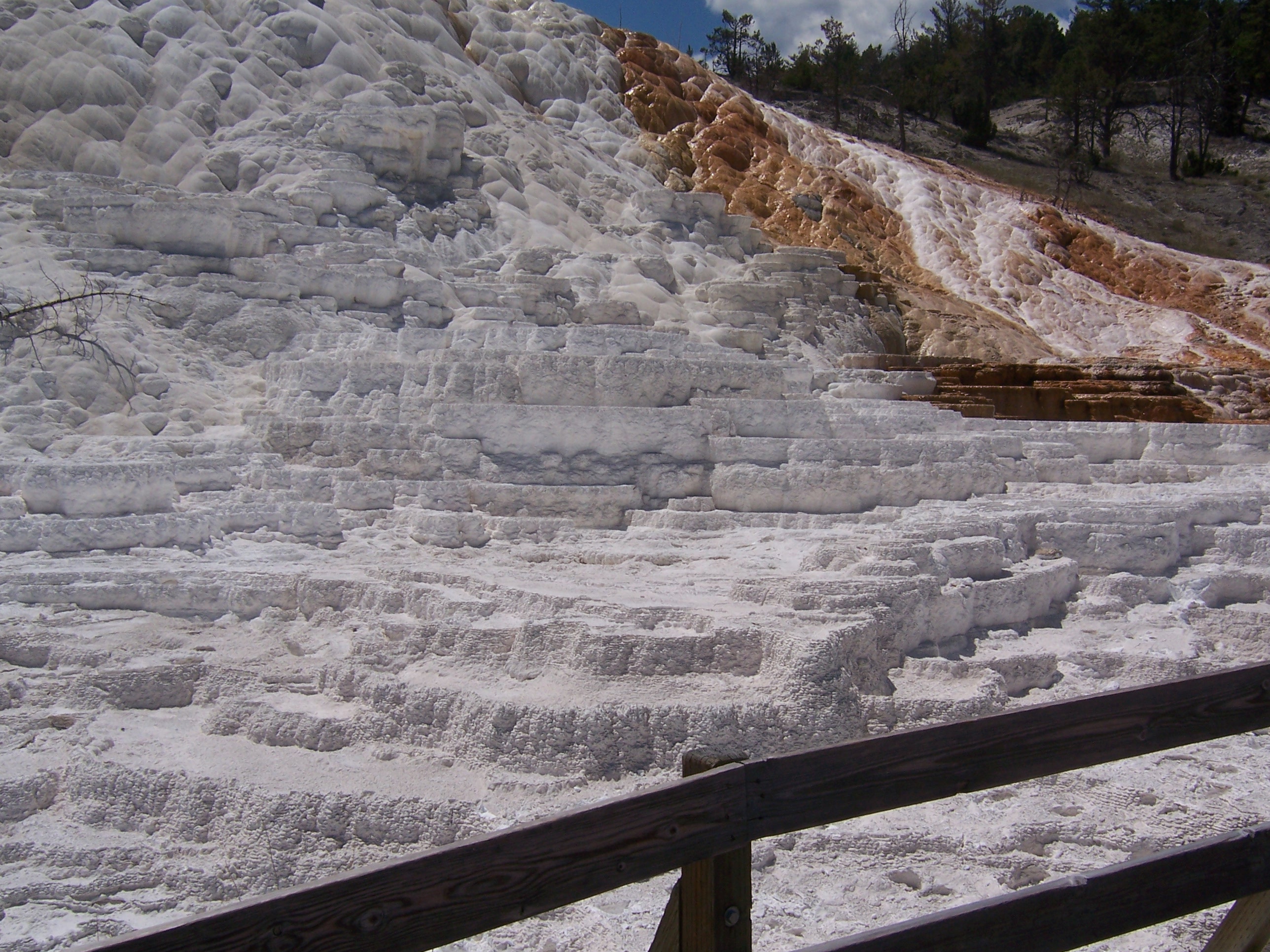
(Yellowstone Nat'l Park, Wyoming) - At the Mammoth Hot Springs, I learned that these white tiered formations were travertine. This mineral is formed when hot water dissolves the limestone beneath Mammoth and brings it to the surface where it cools, and and forms this delicate mineral. These terraces (in the picture) are like "living sculptures," since they can change with changes in temperature, water flow, and bacterial concentrations. (Notice the colorful thermophile bacteria mat in the background.)
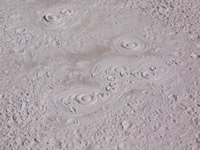
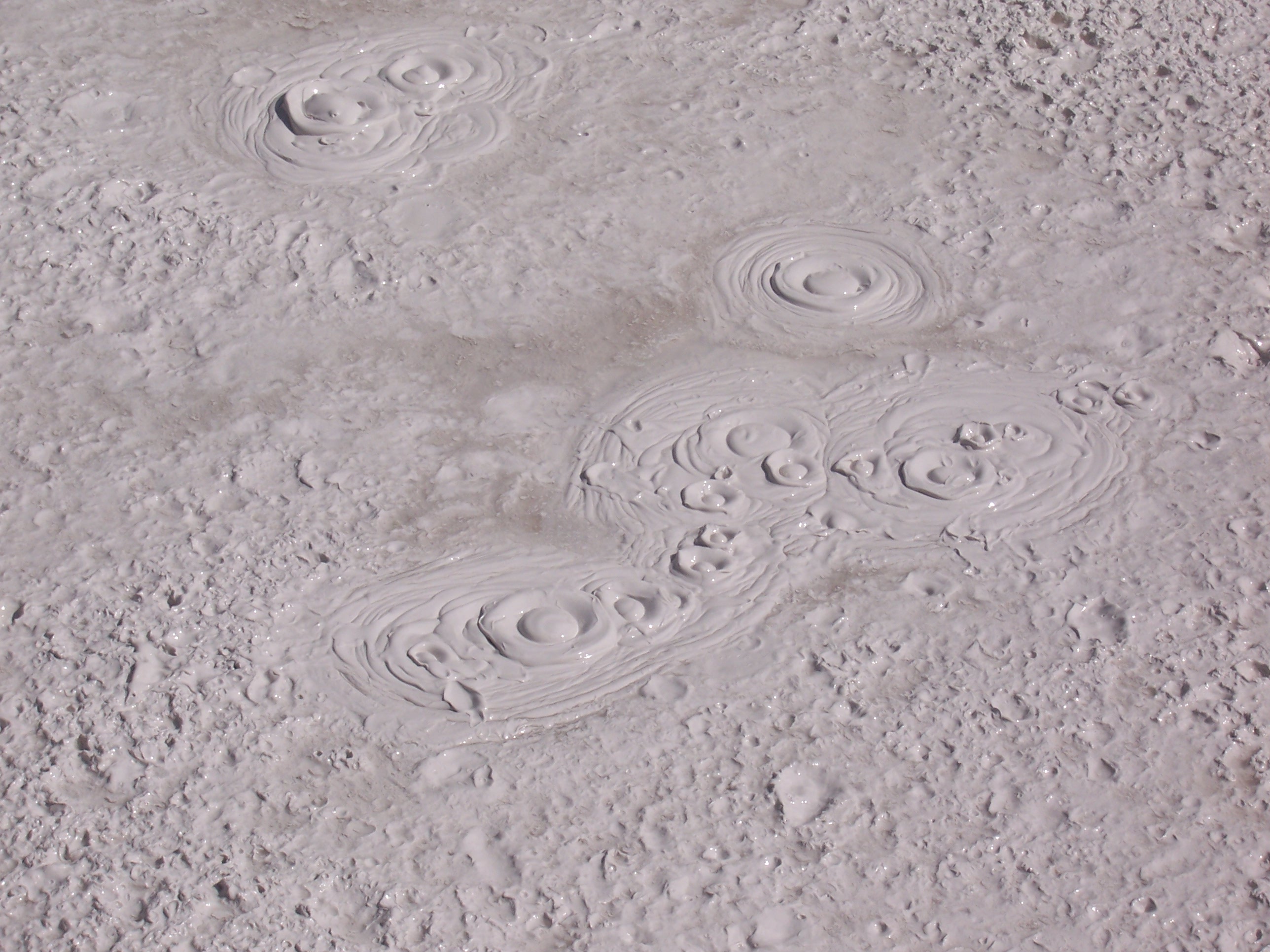
Mud Pots! (Yellowstone Nat'l Park, Wyoming) - I was somewhat familiar with hot springs before my Yellowstone trip, but I was was never introduced to their close cousins, the fumarole and the mudpot. The mudpots quickly became my favorite geothermal feature, mostly due to their "bloop bloop" sounds. A mudpot or paint pot is a sort of hot spring or fumarole consisting of a pool of usually bubbling mud. Watch my Quicktime video to see a mudpot hurling mud into the air.

Craters of the Moon (Idaho) - I saw fields of lava, both áa ("ay-ay") and pahoehoe ("pa-hoy-hoy") lava. (I liked the sound of those names!) The highlight of this visit had to be exploring the caves formed by the collapse of giant lava tubes. The tubes were originally formed as hot lava melted and rock in its path, while the surface of the lava in contact with the air hardened (forming the "roof" of the cave). When these tubes collapsed, they made great caves to explore!

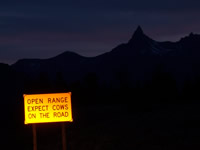
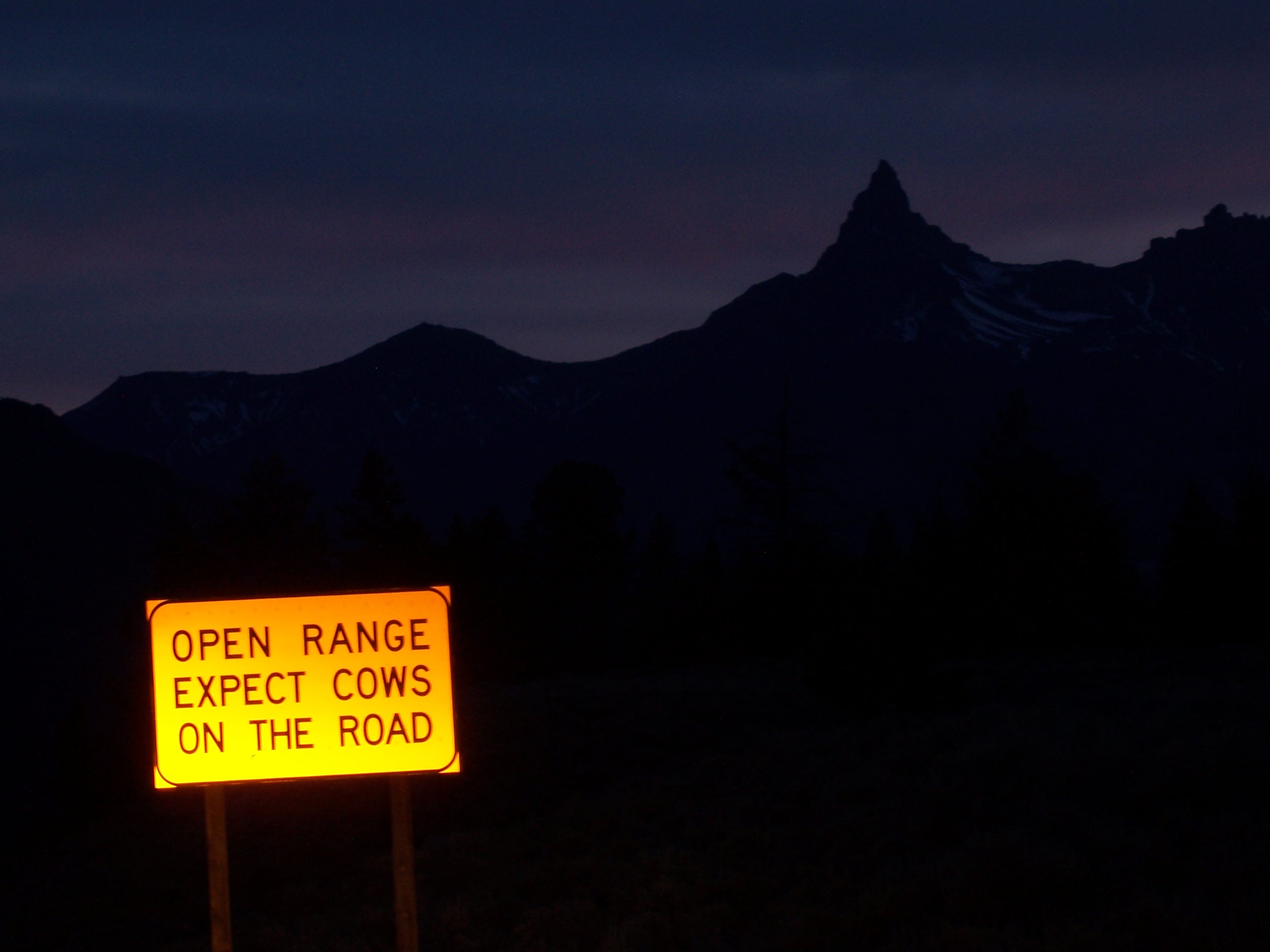
Finally, I couldn't resist... this picture is one of my favorites from the trip. You don't see this in Chicago!