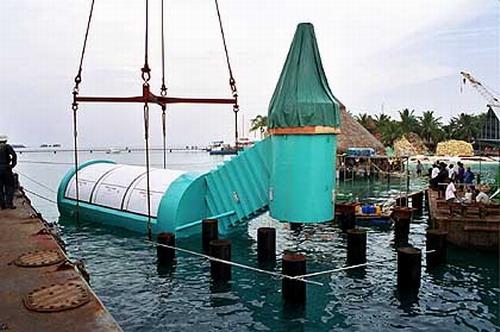
 Did you know there is a restaurant completely underwater? (This is the strangest thing I have heard about since the first ice hotel!)
The Ithaa Restaurant (Ithaa means “pearl” in the
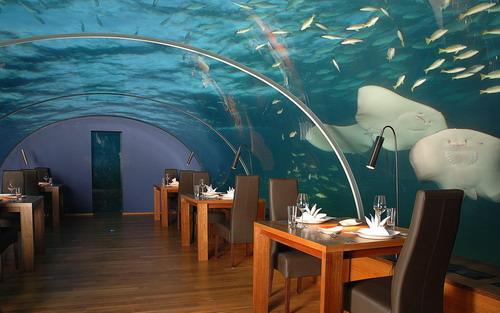 Did you know there is a restaurant completely underwater? (This is the strangest thing I have heard about since the first ice hotel!)
To announce the arrival of the BRAVIA LCD and 3LCD range, we wanted to get across a simple message - that the colour you'll see on these screens will be 'like no other'. - Bravia site
 So, the first commercial (filmed in 2005) features 250,000 superballs, a kid, and one frog. It took 23 people to film and "only one chance to get [the main sequence] right". With a combination of trucks and air cannons, the balls were released. Although pretty to look at, "these balls can do some damage, so all the cars were props and crew members went so far as to having protective shields and crash helmets."
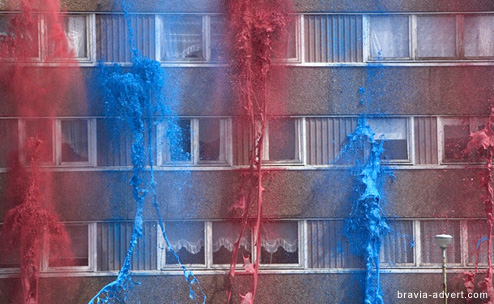 This one (July 2006) was filmed in Glasgow, Scotland and took 10 days, 250 people (to film), and 70,000 liters of paint. (The cleaning took 5 days and 60 people!) And of course, as in all experiments, "safety first."
Keeping everyone safe was also an important factor. A special kind of non-toxic paint was used that is safe enough to drink (it contains the same thickeners that are sometimes used in soups). It was also completely harmless to the skin.
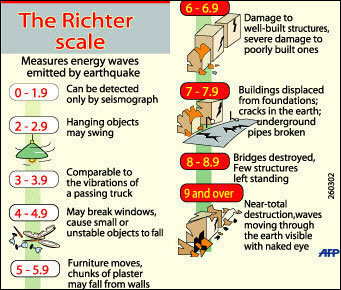
The Richter scale is a standard scale used to compare earthquakes. It is a logarithmic scale, meaning that the numbers on the scale measure factors of 10. So, for example, an earthquake that measures 4.0 on the Richter scale is 10 times larger than one that measures 3.0. On the Richter scale, anything below 2.0 is undetectable to a normal person and is called a microquake. Microquakes occur constantly. Moderate earthquakes measure less than 6.0 or so on the Richter scale. Earthquakes measuring more than 6.0 can cause significant damage. The maximum quake rating ever measured is about 8.9. - HowStuffWorks
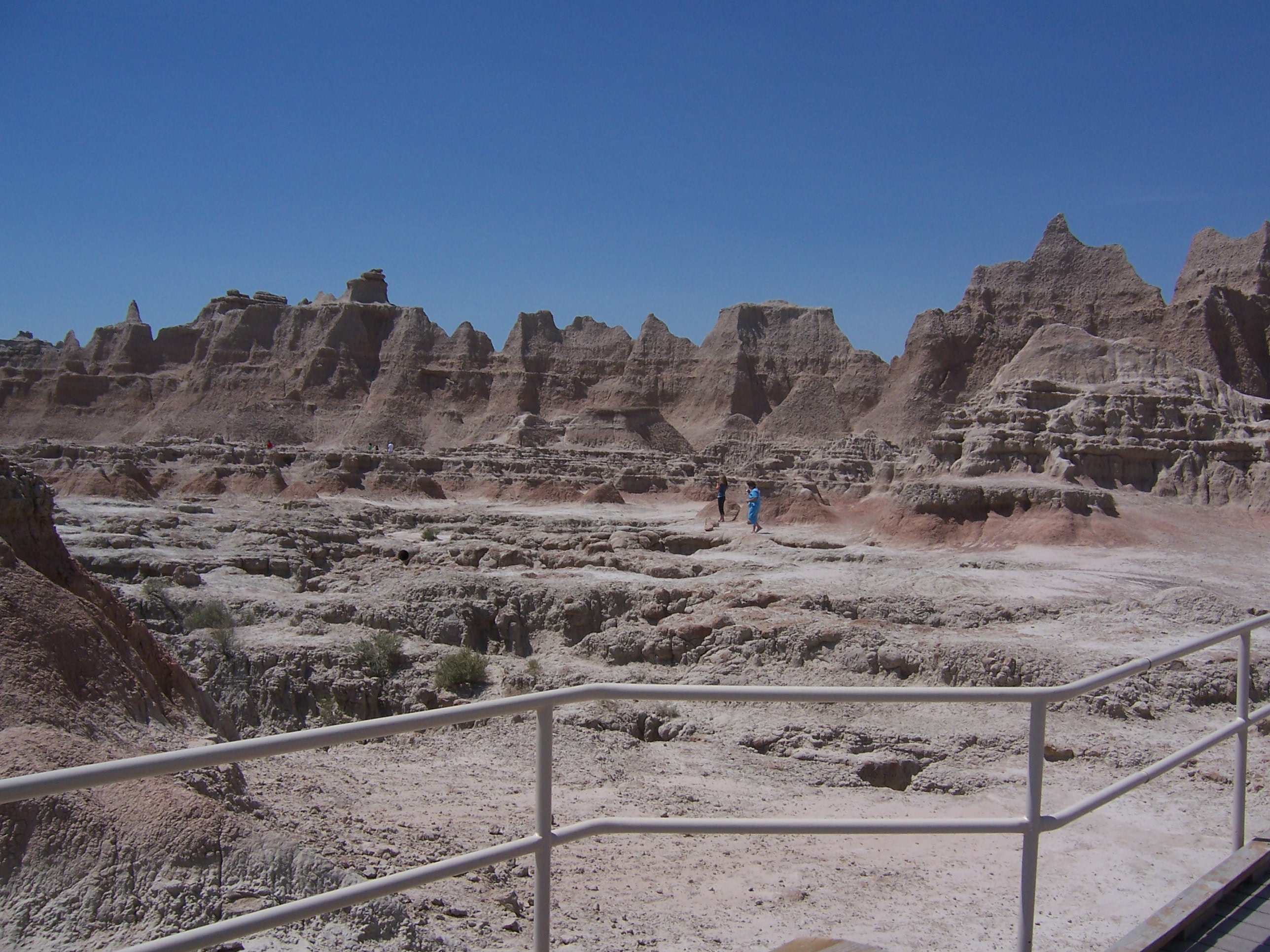 The Badlands (South Dakota) - This national park consists of nearly 244,000 acres of some of the most bizarre landforms I have ever seen. Here, rivers and rainstorms have been eroding away the soft sediments and volcanic ash, revealing colorful bands that correspond with specific time periods in the history of the rock formation.
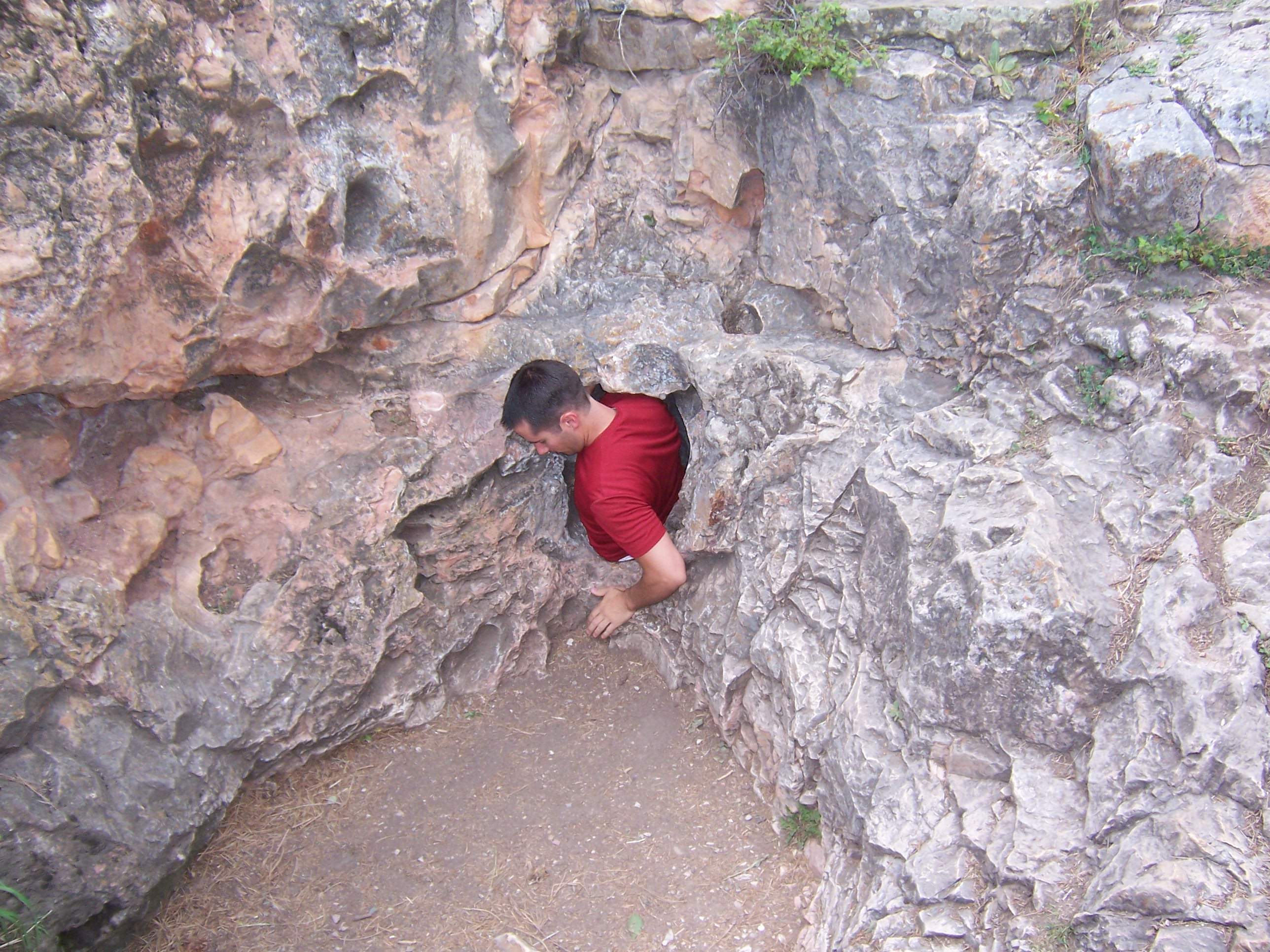 Wind Cave (South Dakota) - First explored by a 16 year old boy with a candle and a string, Wind Cave now has over 100 miles of known passageways, although studies indicate only about 5% of the cave has been discovered.
This was confirmed on our visit by the presence of ominous clouds in the distance (storm approaching) and the strong winds blowing out of the natural entrance.The wind is driven by changes in barometric pressure. The air pressure within the cave and outside attempt to reach equilibrium. The wind blows into the cave when the barometer rises, and out when the barometer falls. This airflow may forecast how the weather is going to change. - nps.gov
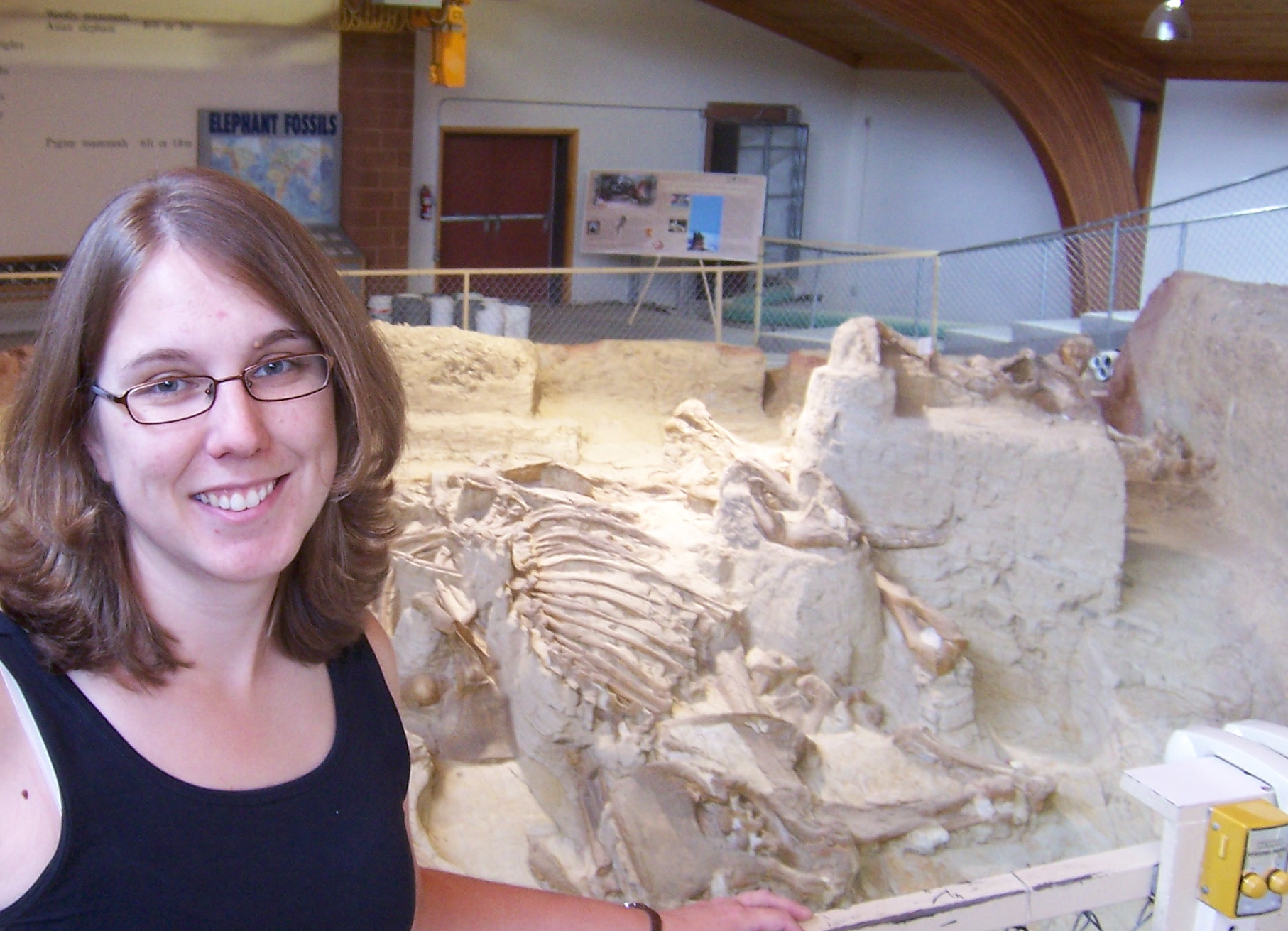 Mammoth Site (South Dakota) - More than 26,000 years ago, many large Colombian and woolly mammoths spent their time tediously scraping away the snow with their tusks to find food. However, scientists believe some mammoths were "lazy" and were instead lured by the more easily-accessible vegetation at the sinkhole's edge. Once these mammoths risked coming near the sinkhole's edge, it is believed they fell in, became trapped and died.
 Devil's Tower (Wyoming) - Geologists agree that Devils Tower is the core of a volcano exposed after millions of years of erosion. However, there is still debate about the exact details of its formation. This bizarre land form has been somewhat of a mystery. Perhaps that is why Stephen Spielberg used Devil's Tower as an alien communication point in his movie Close Encounters of the Third Kind.
In one story, two girls playing in the woods are chased by an enormous bear. The girls jump on top of a rock, but it is too small to give them safety. The Great Spirit sees the girls' predicament and causes the rock to grown to an immense size. The giant bear jumps at the girls, but cannot reach the top. His claws leave the gouges in the side of the rock that can still be seen today. - the Unmuseum
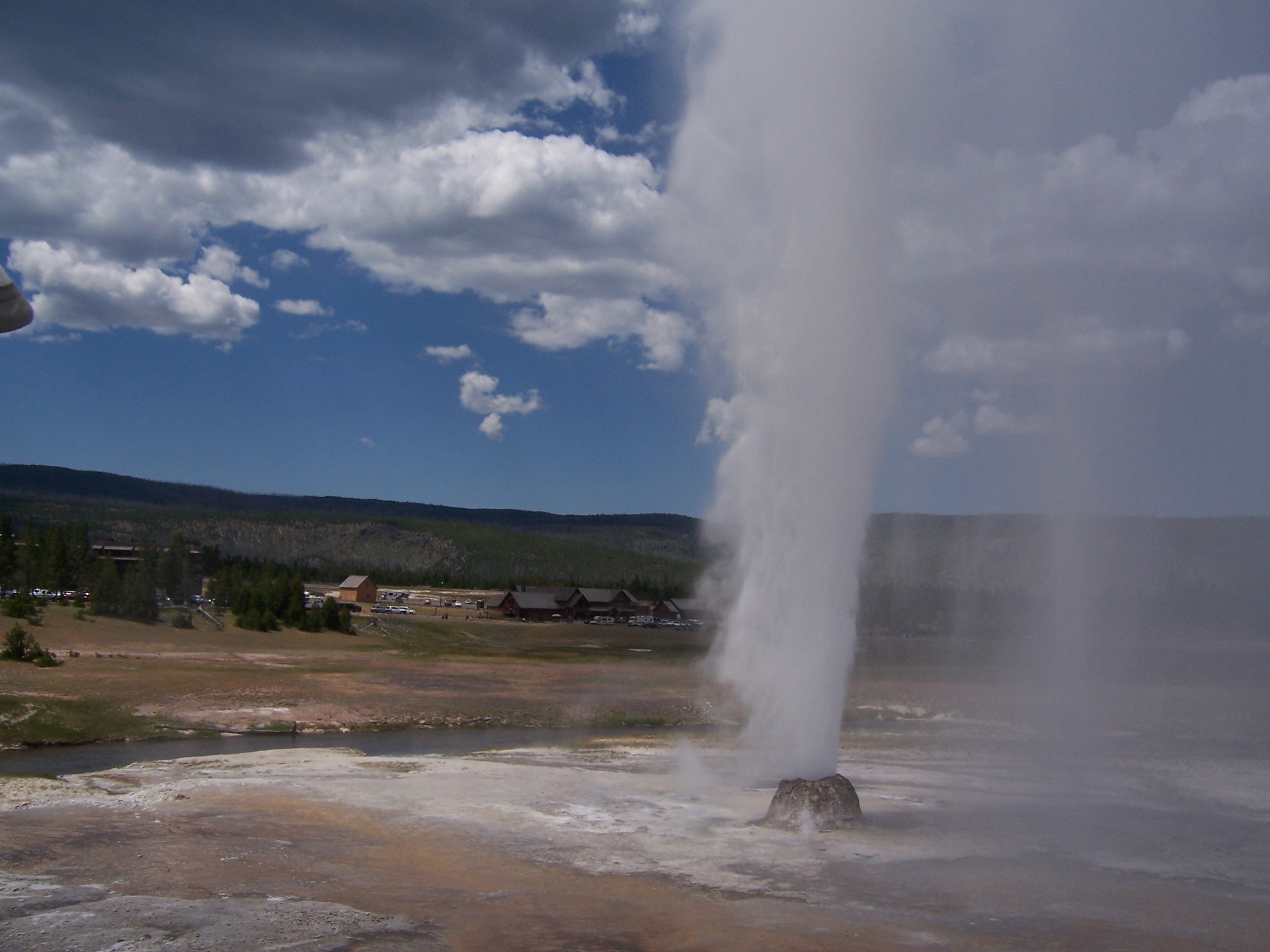 Beehive Geyser (Yellowstone Nat'l Park, Wyoming) - While Old Faithful is certainly the most famous geyser at Yellowstone, it is just one of the 10,000 geothermal features found in the park. The geyser in the picture is Beehive Geyser, an unpredictable cone geyser with water reaching 93 °C (199 °F) and eruptions up to 200 feet! A cool thing about this geyser is that there is a small vent located a few feet east of Beehive, called Beehive's Indicator, which erupts about 6 feet, 10-20 minutes before an eruption. When we walked by the sputtering indicator, we decided to stick around for the show!
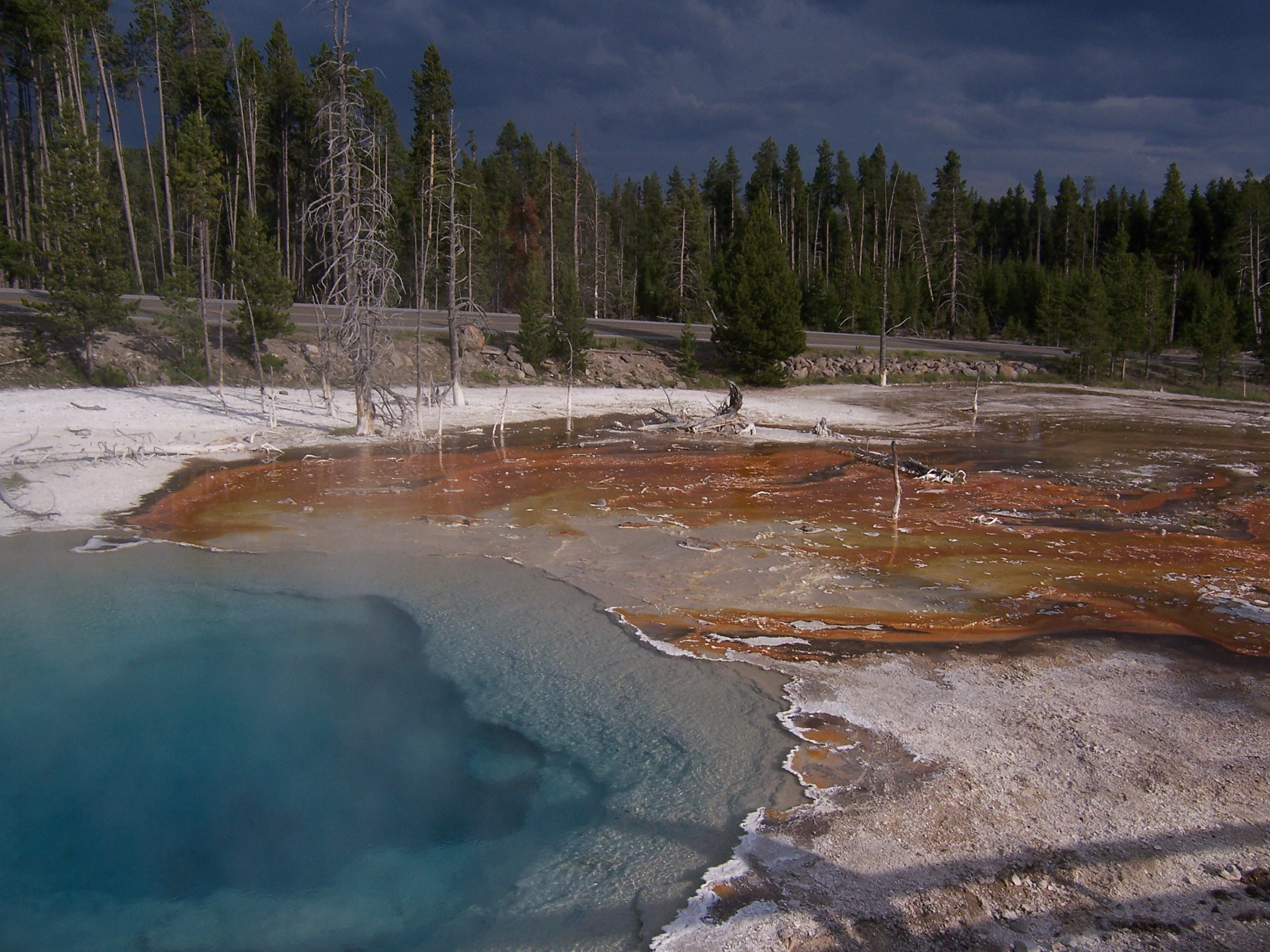 Yellowstone Nat'l Park, (Wyoming) - Thermophiles, or microbes that live in extremely hot conditions, make up these colorful bacterial mats. Pigments (like chlorophyll and carotenoids) within the microbes are responsible for their colors. The run-off channel from a hot spring, for example, is white or clear near its source. This water is heated by the magma just under the earth's crust! Only a few single-cell bacteria live in this boiling water, which is 93 °C (199°F). (Pure water boils at 212°F at sea level.) As the water slightly cools to 167°F farther downstream, the first colorful forms of bacteria show up. Shades of green to pink to orange to yellow-brown to gray indicate bacteria growing in slightly different temperature regions on the mat.
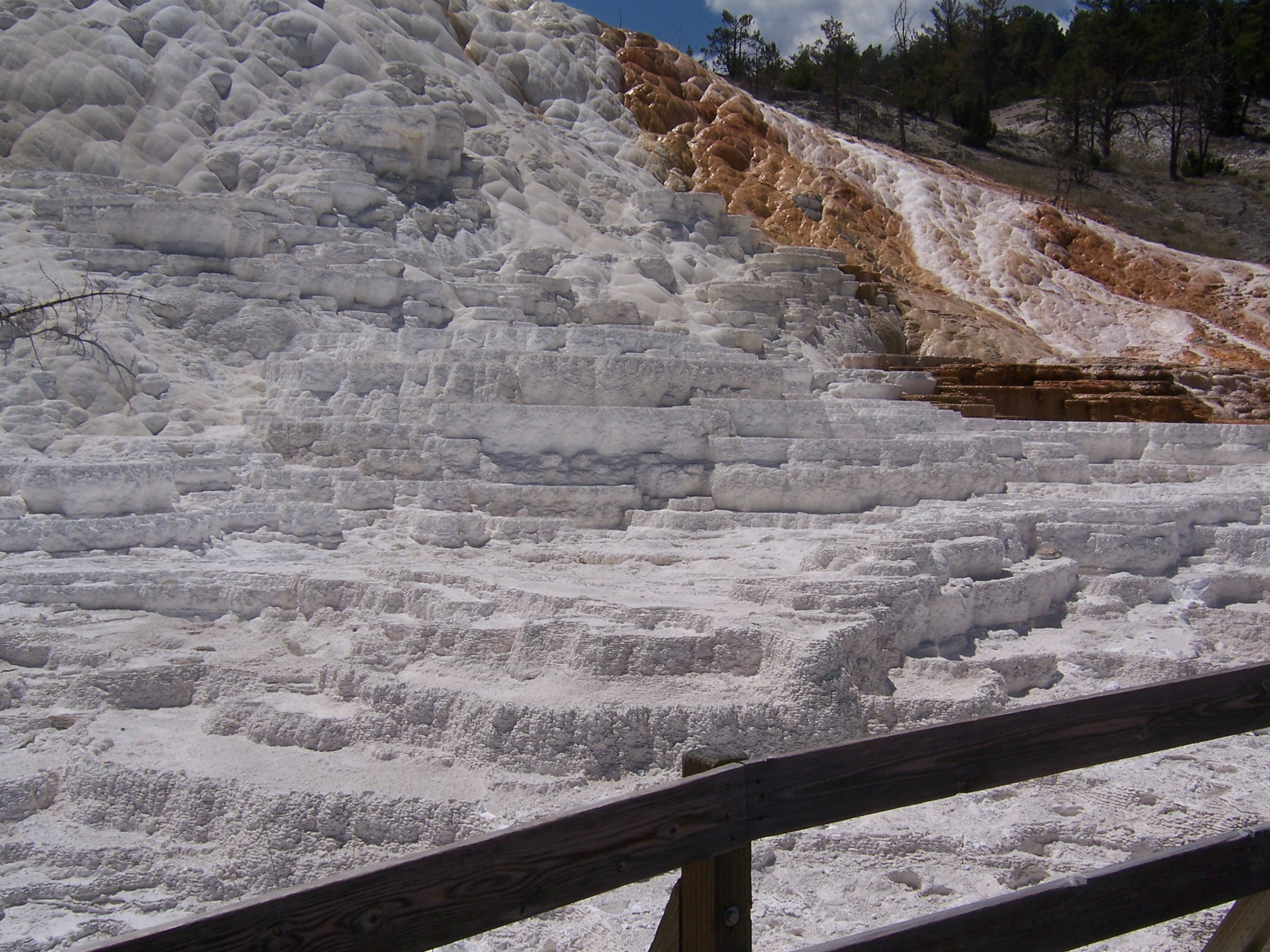 (Yellowstone Nat'l Park, Wyoming) - At the Mammoth Hot Springs, I learned that these white tiered formations were travertine. This mineral is formed when hot water dissolves the limestone beneath Mammoth and brings it to the surface where it cools, and and forms this delicate mineral. These terraces (in the picture) are like "living sculptures," since they can change with changes in temperature, water flow, and bacterial concentrations. (Notice the colorful thermophile bacteria mat in the background.)
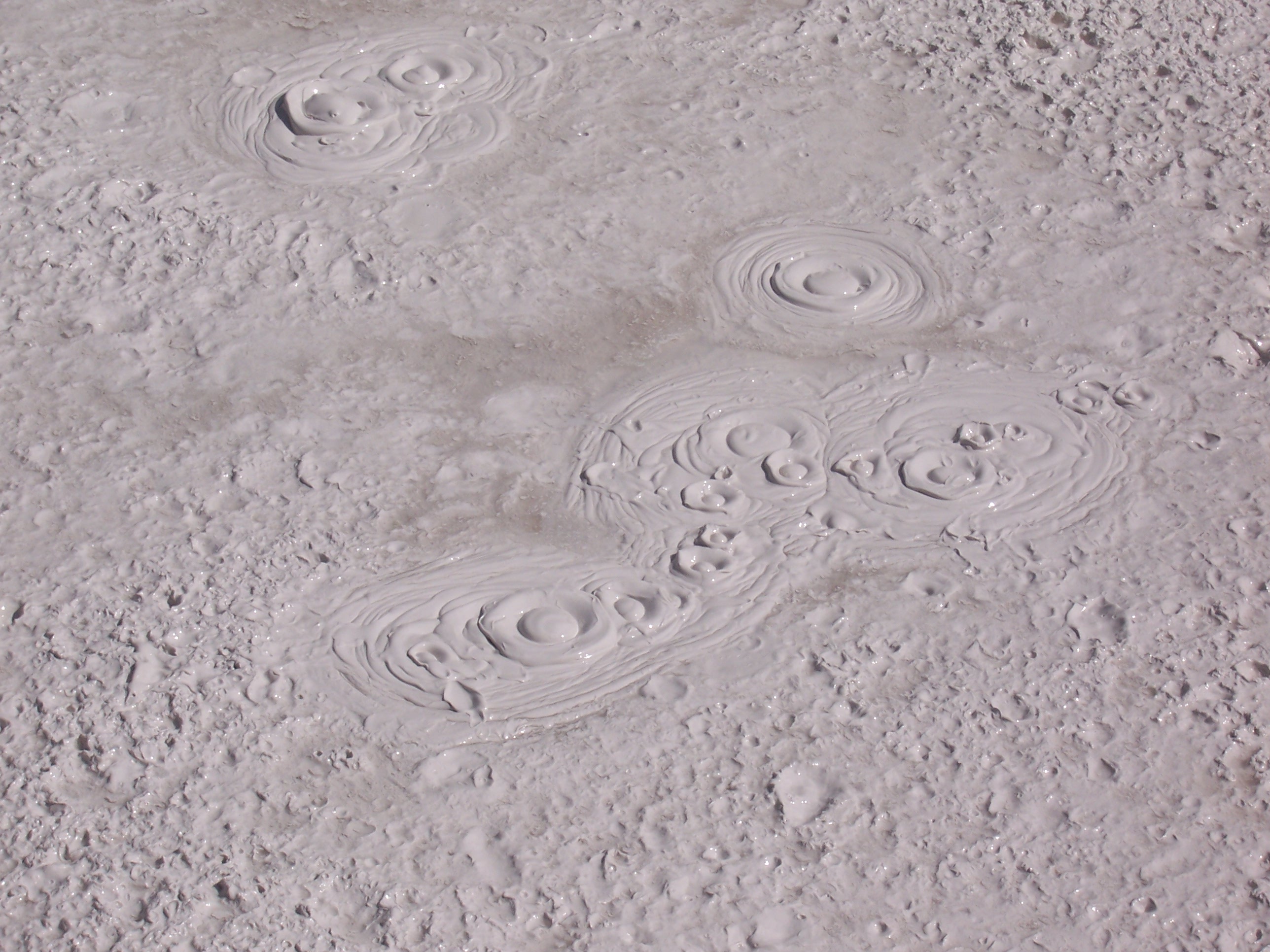 Mud Pots! (Yellowstone Nat'l Park, Wyoming) - I was somewhat familiar with hot springs before my Yellowstone trip, but I was was never introduced to their close cousins, the fumarole and the mudpot. The mudpots quickly became my favorite geothermal feature, mostly due to their "bloop bloop" sounds. A mudpot or paint pot is a sort of hot spring or fumarole consisting of a pool of usually bubbling mud. Watch my Quicktime video to see a mudpot hurling mud into the air.

 Speaking of food, there is an amazing photo gallery from Time Magazine. (It is based of a book called Hungry Planet.) Each of the 15 photos show family members standing around the food that would make up a series of typical meals for the week, plus the weekly cost and a list of their favorite foods.
Eat food. Though in our current state of confusion, this is much easier said than done. So try this: Don’t eat anything your great-great-grandmother wouldn’t recognize as food. (Sorry, but at this point Moms are as confused as the rest of us, which is why we have to go back a couple of generations, to a time before the advent of modern food products.) There are a great many foodlike items in the supermarket your ancestors wouldn’t recognize as food (Go-Gurt? Breakfast-cereal bars? Nondairy creamer?); stay away from these.
Especially avoid food products containing ingredients that are a) unfamiliar, b) unpronounceable c) more than five in number — or that contain high-fructose corn syrup.None of these characteristics are necessarily harmful in and of themselves, but all of them are reliable markers for foods that have been highly processed.
What happens when the world's leading hacker chefs skill up on organic chemistry and buy centrifuges for their kitchens? Is your palate ready for "meat glue", "cooking" with liquid nitrogen, and "liquid noodles"? ... [this] looks at the growing role of science in fine dining kitchens with examples from the restaurants that are inventing the exciting field of molecular gastronomy. (Dorkbot)I am a terrible cook, and usually consume food I can carry in one hand (apple, bagel, rice cake). However, my interest in food preparation was piqued when I read about food hacking! This trend, popularized by scientifically-minded chefs, is based on the principle of "creat[ing] dishes based on the molecular compatibilities of foods." For example, a food hacker might combine chocolate and oysters (!) due to the similarities in their molecular make-up.
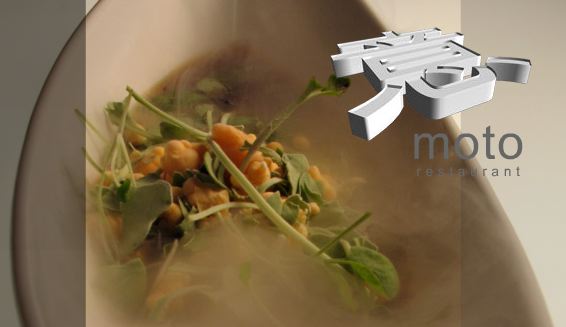
You don't just eat chef Homaro Cantu's food. You gape in disbelief as you are instructed in how to handle his offbeat creations with even more peculiar utensils: The whole thinking is like a three-star science lab. (from one of many reviews of the restaurant)
 Well, the two whale sharks were flown 8,000 miles from Taipei, Taiwan on a specially-designed cargo plane with 20-foot-long fiberglass tanks with oxygen machines and other equipment to keep them healthy on their trip. When they arrived in Atlanta, Georgia, their tanks were transferred to two flatbed trucks and driven to the aquarium surrounded by an escort of Atlanta police cars with their blue lights flashing. (video) They will join three other whale sharks in their new home in a 6 million gallon tank.
The aquarium kept the timing of Qannik's move under wraps to stave off protests, officials told The News Tribune of Tacoma for a story posted on the paper's Web site Sunday.
John Cooley, a biologist at the University of Connecticut says it is not the lawn chemicals doing the damage, although humans are the ultimate culprit.
When cicada nymphs emerge, they must find something vertical to climb and stake out perching places to molt. At its perch, each cicada slips out of its nymph shell and then must hang undisturbed on that perch until its new exoskeleton unfolds and begins to harden properly. If it is disturbed during that time, its exoskeleton will be deformed ("faulty ecdysis," to the scientists).
In regular woody settings, there are plenty of trees, shrubs and tall grasses to support the cicada population. But here in the suburbs, yards are carefully landscaped, with neatly trimmed lawns and a few strategically placed trees and bushes, which limits the number of perches for the nymphs to hang on.
Since many cicadas must crawl onto the same places, they often bump into or climb over each other. This is a problem for those light-colored, recently molted cicadas who are waiting for their exoskeletons to harden. At the delicate stage when they must hang undisturbed, they are finding themselves trampled by other cicadas. This causes the many deformed cicadas.
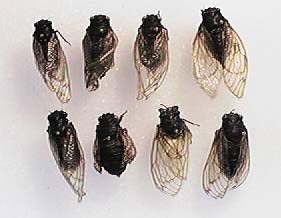
The University of Connecticut Dept. of Ecology agrees, "Cicadas sometimes fail to properly inflate their wings after molting; such individuals can be found in low vegetation in any emergence.... The cicadas in the picture below came from a 1990 emergence in a suburban front yard near Chicago. Many of the cicadas in this area had deformed wings. Possible explanations include crowding (during molting) and use of lawn chemicals."